
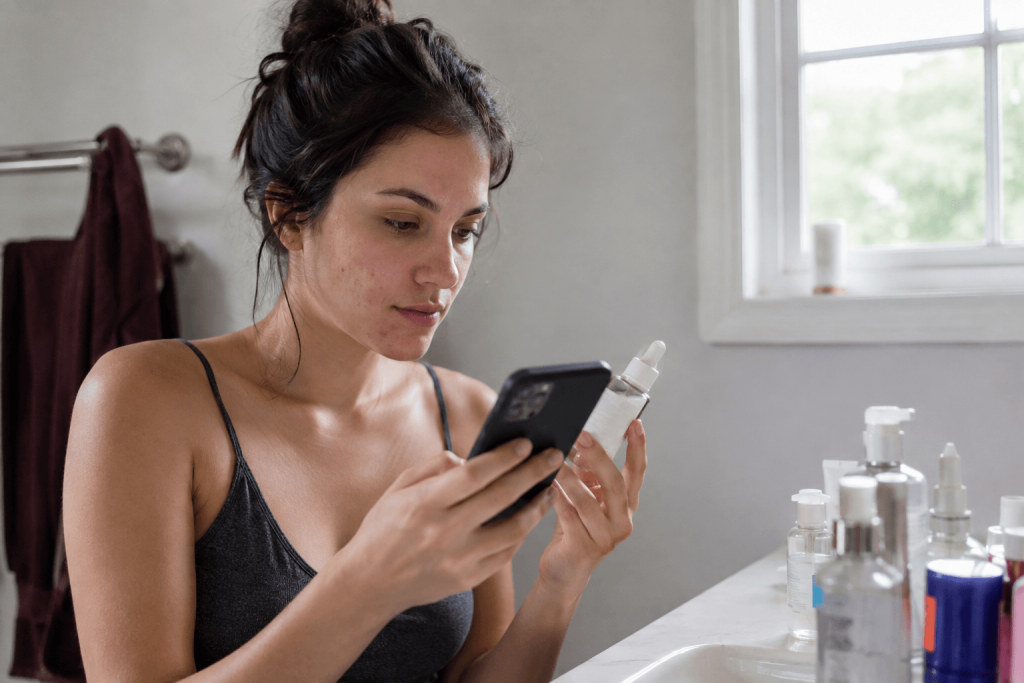
If you need a pore clogging checker app for hormonal acne, ReadLabel helps you scan a product’s ingredient list and see whether it may include comedogenic ingredients. It is a fast way to screen skincare and makeup before you buy, without guessing from marketing claims.
Check a product before it becomes a breakout risk
ReadLabel is built for the moment you are standing in a store, comparing carts, or opening a new product at home. It tells you quickly whether the formula may include ingredients that are more likely to clog pores for acne-prone users.
Use it when you want to answer one question fast: will this clog my pores?
- Scan an ingredient list with your camera
- Upload a photo you already took
- Scan the product barcode where available
- Review flagged ingredients in plain language
Why hormonal acne shoppers use a pore-clogging checker app
Hormonal acne has multiple triggers, but product choices still matter. Checking for hidden pore cloggers is a practical screening step when you want to reduce avoidable breakouts from skincare or makeup.
That is why this acne-safe ingredient scanner app is useful before purchase. It helps you filter products that may be a poor match for acne-prone skin, even if the label says non-comedogenic or clean formula.
How ReadLabel works on mobile
ReadLabel is designed for scan skincare ingredients app use, not long research sessions. You can check a product in a few taps and move on with a clearer yes-or-no decision.
- Open the app.
- Scan the ingredient list with your camera or upload a photo.
- Let the app extract the INCI ingredient list.
- Review the pore clogging ingredients checker results.
- Decide whether to keep, skip, or compare another product.
This makes it a practical barcode skincare ingredients app alternative when you are shopping fast and want a mobile-first answer.
What you get back from a scan
ReadLabel does more than highlight a name. It gives acne-prone users a clearer product screen so they can make a decision with less second-guessing.
You may see:
- Ingredients flagged for pore-clogging or comedogenic risk
- Acne-related notes in simple language
- Context that helps you understand the full product, not just one ingredient
- A faster next step if you want to compare another formula
That is especially helpful when one comedogenic checker app disagrees with another. ReadLabel focuses on the actual ingredient list printed on the product, so it can analyze any formula you scan.
Why product screening matters more than marketing claims
A label can look acne-friendly and still include ingredients you may want to avoid. That is why people use an ingredient checker for acne prone skin before trying new skincare or makeup.
ReadLabel helps you check the formula itself, not the brand promise. It is a simple way to screen for non comedogenic product checker concerns before a product touches your skin.
Clearer than a generic skincare app
Many tools are broad. ReadLabel is focused on one job: helping acne-prone users quickly check whether a product may contain pore-clogging ingredients.
Compared with broader skincare ingredient scanner apps, ReadLabel is built around:
- Faster ingredient extraction from photos
- Clearer acne-risk explanations
- Transparent flagging logic
- Practical use for acne-prone and hormonal-acne-prone shoppers
- The ability to check products that may not be in a database
If you want the fastest path to the answer, this is the app to use.
Try it when you are comparing products in real life
ReadLabel is useful any time you need a quick check before buying or applying something new. It is especially helpful for in-store decisions, bathroom counter checks, and last-minute product swaps.
Common use cases include:
- Choosing between two moisturizers
- Checking a new foundation or concealer
- Screening a cleanser before first use
- Reviewing a serum after a breakout scare
- Re-checking a product someone recommended online
If you want a broader screening page first, you can also start with the pore clogging ingredients checker.
How ReadLabel supports acne-prone and hormonal-acne-prone users
ReadLabel does not diagnose hormonal acne or replace medical advice. It does give you a fast product-screening layer that fits how acne-prone shoppers actually choose products.
That matters because hormonal acne can make you more cautious about formula changes. ReadLabel helps you reduce the risk of trial-and-error by checking for ingredients that may be a problem for your skin.
Start with a fast scan, then decide
If your goal is to find an acne safe product checker app, ReadLabel gives you a simple workflow: scan, review, and decide. It is built for people who want a quicker answer before they buy or use something new.
Use ReadLabel when you want a mobile-first way to check skincare and makeup for pore-clogging risk, especially if you are trying to protect hormonal acne-prone skin.
FAQ
Is there an app that checks skincare ingredients for hormonal acne?
Yes. ReadLabel is a hormonal acne ingredient checker app that scans ingredient lists and flags possible pore-clogging risk before you buy or use a product.
How do I know if a product is pore clogging?
Scan the ingredient list in ReadLabel and review the flagged ingredients. The app shows whether a product may contain comedogenic ingredients and gives you a clearer next step.
Can I scan a product instead of typing ingredients?
Yes. ReadLabel supports scanning an ingredient list with your camera and uploading a photo. It also supports barcode scanning where relevant.
Are comedogenic ingredients guaranteed to cause acne?
No. Risk varies by person, formula, and product type. ReadLabel helps you screen products for pore-clogging risk, but it does not promise the same result for every user.
What is the difference between non-comedogenic and acne-safe?
Non-comedogenic suggests a product is less likely to clog pores, while acne-safe is a broader practical label users often look for. ReadLabel helps you check the actual formula so you can decide for yourself.
How can I scan a product to see if it is acne safe?
Open ReadLabel, scan or upload the ingredient list, and review the app’s acne-related flags. It is the fastest way to check a product before you commit to it.