
Fast answers for combination skin shoppers
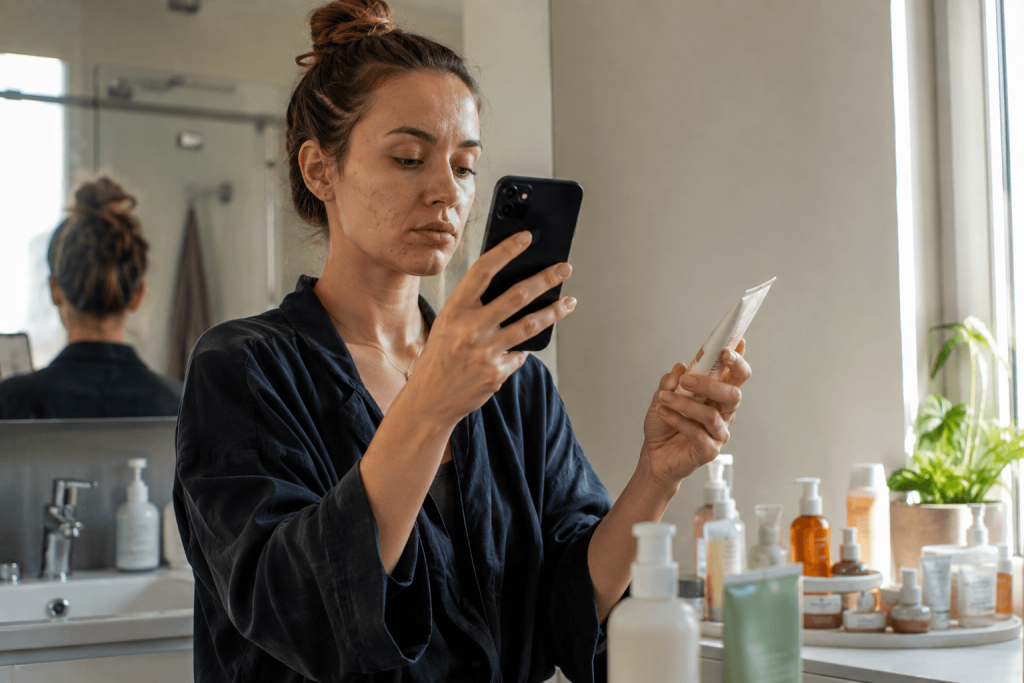
A comedogenic checker app for combination skin helps you scan a product’s ingredient list and quickly see whether it may be too pore-clogging for oily areas while still looking workable for drier zones. ReadLabel does that in plain language, so you can answer the real question fast: will this clog my pores?
It is built for acne-prone shoppers who do not want to decode INCI ingredient lists by hand. It also helps with skincare and makeup decisions before you buy.
How ReadLabel checks products
ReadLabel scans ingredient lists from a photo and flags potentially pore-clogging ingredients in a simple, product-focused summary. You do not have to compare every chemical name yourself.
You can use it to:
- Scan an ingredient list with your camera
- Upload a photo of the label
- Check a skincare ingredient scanner app workflow on the go
- Review a barcode skincare ingredient checker result where relevant
The goal is not a raw ingredient dump. It is a quick decision: non-comedogenic, maybe risky, or likely worth skipping.
Why combination skin needs a different read on comedogenicity
Combination skin is not the same as purely oily skin. A formula that feels fine on dry cheeks can still be a bad fit for the oily T-zone or acne-prone areas.
That is why ReadLabel focuses on practical product fit. It helps you judge whether a cleanser, moisturizer, sunscreen, or makeup product may be too heavy for breakout-prone zones without automatically ruling it out for the whole face.
What kinds of products you can check
ReadLabel works for the products combination-skin shoppers use every day. That includes:
- Cleansers
- Moisturizers
- Sunscreens
- Makeup
- Acne-friendly skincare
- Other leave-on or rinse-off formulas you are considering
If you are asking, “is this acne safe?” before buying, this is the fastest place to check.
How the results are presented
Instead of forcing you to interpret a long ingredient list, ReadLabel gives you a clearer product decision. Results can highlight flagged ingredients and show whether the formula looks more or less suitable for pore-clogging concerns.
That makes it easier to compare products while shopping. You can see whether a formula may be sensitive skin friendly, more acne-prone friendly, or likely too risky for your skin goals.
Built for quick label checks, not manual research
Manual ingredient checking takes time, and it is easy to miss hidden pore cloggers. ReadLabel is the faster alternative when you are standing in a store, browsing online, or checking a product after it arrives.
This is where it compares well to doing everything by hand. You get a faster read on hidden pore cloggers without needing to memorize every comedogenic ingredients list entry.
What to expect from the methodology
Comedogenicity is a guide, not a medical certainty. A product can still behave differently depending on concentration, formula balance, and your own skin.
That is why ReadLabel is best used as a decision tool, not a promise. It helps you reduce risk before purchase or use, especially if you are trying to find acne safe products for combination skin.
Why shoppers choose ReadLabel over manual checking
ReadLabel is useful because it combines speed, convenience, and context. It is designed for the moment when you want an answer now, not a long ingredient lesson.
Compared with manual checking, it gives you:
- Faster product screening
- Clearer pore-clogging flags
- A simpler way to review skincare and makeup
- A mobile-friendly workflow for shopping and label scans
If you want the broader product checker, you can also use the main pore clogging ingredients checker page.
Who this app is for
This page is for combination skin users who are also acne-prone shoppers. It is especially useful if you often ask:
- Will this clog my pores?
- Is this acne safe?
- Does this look non-comedogenic for my skin type?
- Can I use this on my oily areas without overloading my dry zones?
If that sounds like your shopping process, ReadLabel is a strong fit.
Try it when you are ready to check a label
If you want a fast way to scan skincare or makeup ingredients, ReadLabel gives you a practical answer in seconds. It is a simple way to check whether a product may be too pore-clogging for combination skin before you commit.
You can start with the 3-day free trial and test it on the products you already own or plan to buy.
FAQ
What app checks for comedogenic ingredients?
ReadLabel checks ingredient lists for potentially pore-clogging ingredients and shows you a simple product-level result. It is designed for fast scans on skincare and makeup labels.
How do I know if a skincare product is comedogenic?
Scan the ingredient list and look for flagged pore-clogging ingredients. ReadLabel helps you do that faster than manual checking and gives you a clearer decision.
What skincare is best for combination acne-prone skin?
The best choice is usually a formula that does not overload oily zones or irritate drier areas. ReadLabel helps you screen products before you buy so you can choose with more confidence.
Is there an app to scan skincare ingredients?
Yes. ReadLabel lets you scan ingredient lists from a photo or upload a product label photo to analyze the formula quickly.
Are comedogenic ratings accurate for everyone?
No. Comedogenicity is not a guarantee, because skin reacts differently and formulas vary. ReadLabel treats it as a useful guide for better product decisions, not a medical certainty.