
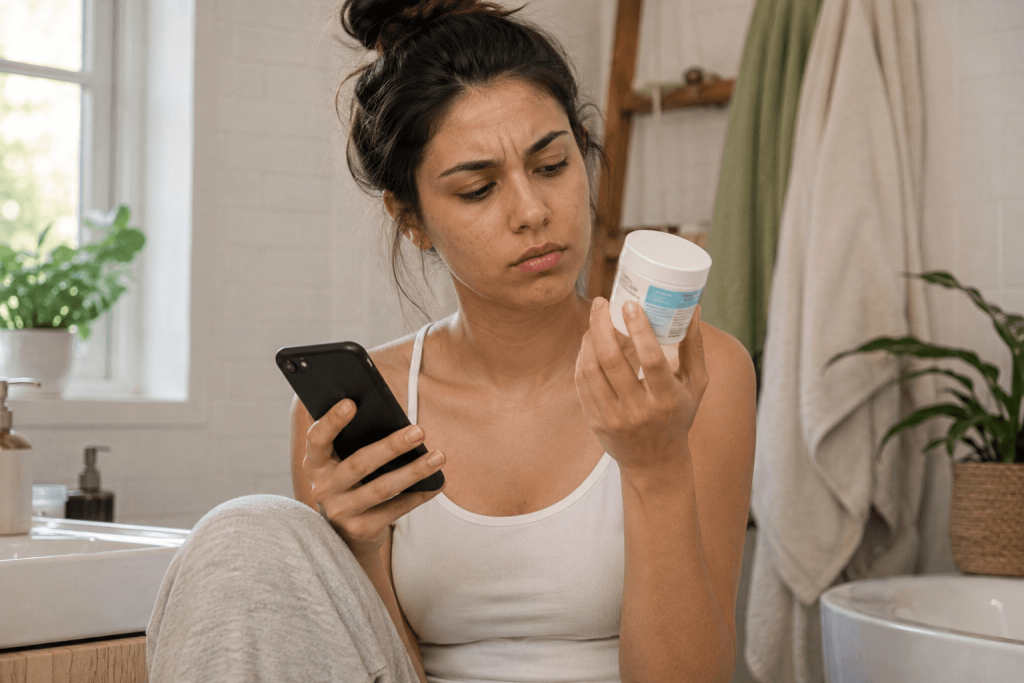
The pore clogging checker app for oily skin helps you quickly see whether a skincare or cosmetic product may contain ingredients that could clog pores. It is made for oily skin and acne-prone skin users who want a fast answer before buying or applying a product.
Check a product fast on mobile
ReadLabel is a skincare scanner app that reads ingredient lists from photos. You can take a photo, upload one, or scan an ingredient list with your camera.
Use it when you want to know:
- Will this clog my pores?
- Is this acne safe for oily skin?
- Does this product contain comedogenic ingredients?
- Is this a non-comedogenic formula in practice, not just on the label?
The goal is simple. Open the app, scan the label, and get an instant oily skin product checker result.
See flagged ingredients, not vague marketing claims
A product can say non-comedogenic and still include ingredients worth reviewing. ReadLabel checks the actual label, so you can catch hidden pore cloggers before you buy.
Typical outputs include:
- Flagged ingredients in the formula
- A plain-language explanation of why they were flagged
- An overall suitability read for oily skin and breakout-prone users
That makes it easier to compare products and choose a skin-safe ingredient scanner result you can trust.
Why oily skin users use a pore-clogging checker app
People with oily skin often want fewer surprises. A product that feels rich or looks harmless can still be the one that makes them think, “this broke me out.”
A comedogenic checker app for oily skin helps reduce that risk by giving you a quick screen before purchase. It is useful when you are shopping for:
- Face wash
- Moisturizer
- Sunscreen
- Makeup
- Hair products that touch the face
If you want a broader tool too, you can also use the main pore clogging checker for more general product screening.
How ReadLabel checks pore-clogging risk
ReadLabel focuses on ingredient-list review, not marketing claims. It scans the text on the product and highlights ingredients that may matter for pore-clogging ingredients checker use cases.
What that means for you:
- It checks the actual formula on the package
- It works on products that may not be in a database
- It gives a faster answer than searching ingredient names one by one
- It is built for real buying decisions, not long research sessions
This is especially helpful if you want a barcode beauty product checker alternative that can still analyze a product from its printed ingredient list.
What makes ReadLabel useful for oily and acne-prone skin
ReadLabel is designed around speed, convenience, and clarity. That matters when you are shopping on your phone and need a quick ingredient checker app for oily skin.
Key benefits:
- Mobile-friendly scanning flow
- Fast checks before checkout
- Clear flag explanations in plain language
- Helpful for acne-safe product checker decisions
- Built for people who want less guesswork
It is a practical way to test whether a product looks more sensitive skin friendly or more likely to be a problem for your face.
Comedogenic claims vs actual ingredient review
A non-comedogenic checker app should do more than trust the label on the front of the bottle. ReadLabel reviews the ingredient list so you can make a decision based on the formula itself.
That matters because:
- Brands use claims differently
- Formulas change over time
- Some products are marketed as safe but still include ingredients you may want to avoid
The result is a more useful product ingredient analyzer app for shoppers who care about breakout risk.
Trust signals and methodology
ReadLabel gives guidance, not a medical diagnosis. Comedogenicity is not perfectly settled, so the app shows you a practical screening result instead of pretending every ingredient has a final answer.
That approach helps you:
- Understand why something was flagged
- See where the result is based on ingredient review
- Make a better buying decision without overreacting to marketing
This balanced approach is one reason users look for a better pore-clogging checker app instead of relying on dated databases like INCI Decoder or CosDNA alone.
How to use ReadLabel for your next purchase
Use the app when you are in store, browsing online, or checking a product you already own.
- Open ReadLabel
- Take a photo or upload an ingredient list
- Let the app scan the label
- Review flagged ingredients and the overall result
- Decide whether the product looks right for oily skin
If you want a fast start, the app also offers a 3-day free trial so you can test the workflow right away.
FAQ
Is there an app to check comedogenic ingredients?
Yes. ReadLabel is a comedogenic checker app that scans ingredient lists from photos and flags potentially pore-clogging ingredients for oily skin and acne-prone skin users.
What does non-comedogenic mean?
Non-comedogenic means a product is marketed as less likely to clog pores, but that claim does not guarantee every formula is a fit for every person. Checking the actual ingredient list is still the safer move.
How do I know if a product will clog my pores?
Scan the ingredient list in ReadLabel and look at the flagged ingredients and overall result. That gives you a fast, practical way to screen a product before you buy or apply it.
Are pore-clogging ingredient checkers accurate?
They are useful decision tools, but they are not perfect or medical. Accuracy depends on the ingredient data, formula changes, and how consistent the evidence is across sources.
Can oily skin use comedogenic ingredients?
Sometimes, yes. But if your skin breaks out easily, a pore clogging checker for oily skin helps you reduce risk and choose products with more confidence.
What ingredients clog pores for oily skin?
Different formulas can be risky for different people, which is why checking the actual product matters more than memorizing a long list. A scanner like ReadLabel helps you review the formula in seconds.
Try the faster way to check pore-clogging risk
If you want a pore-clogging checker app for oily skin that is quick, mobile-friendly, and easy to use, ReadLabel is built for that job. Scan a label, review the flags, and decide with less guesswork.
Scan with ReadLabel