
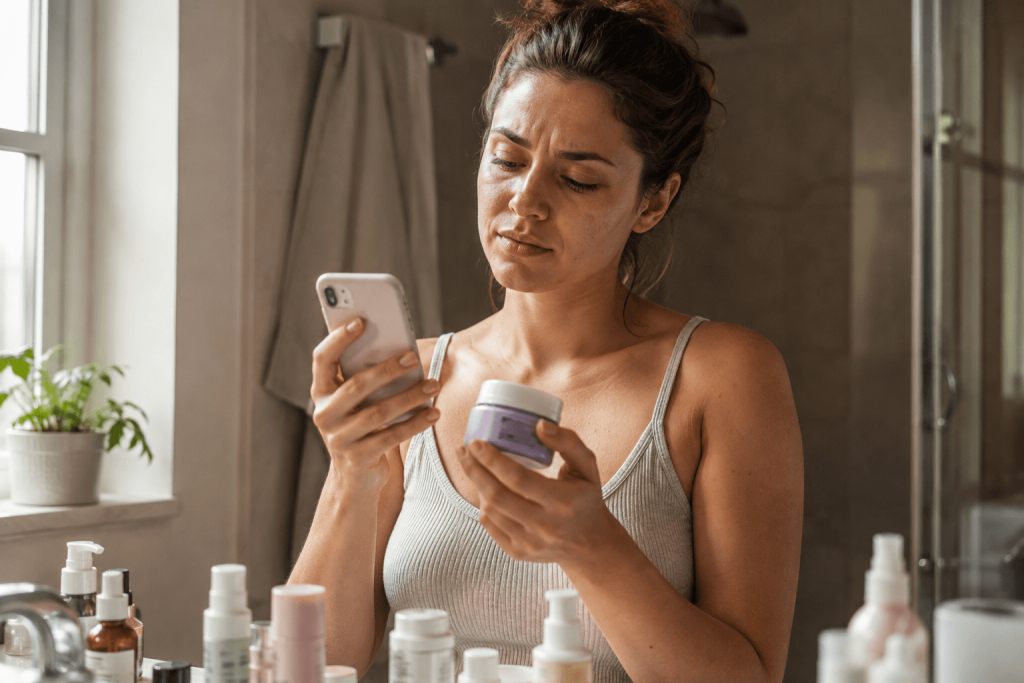
The night cream pore clogging checker in ReadLabel helps you check a product’s ingredient list for potentially pore-clogging ingredients before you buy or keep using it. Scan the label with your camera or upload a photo, and get a fast, plain-language result.
Scan a night cream and see the ingredients that may clog pores
ReadLabel is built for the exact question acne-prone shoppers ask: will this clog my pores? It checks the ingredient list on a night cream and flags ingredients that may raise pore-clogging risk.
That matters more with night moisturizer formulas because they are often richer, heavier, and left on the skin for hours overnight. If you are trying to find an acne safe or non-comedogenic option, this gives you a quick first pass.
How to use the checker on a product label or retailer photo
You do not need to decode the INCI list yourself. Just capture the ingredient list from the package or a retailer page.
- Open ReadLabel.
- Take a photo of the ingredient list or upload an existing photo.
- Let the app scan the label.
- Review the flagged ingredients and the risk summary.
This is useful at home, in-store, or while comparing a replacement moisturizer.
What the result tells you about pore-clogging risk
ReadLabel highlights ingredients that may be a concern and explains why they were flagged. You do not get a vague yes-or-no answer.
Instead, you see a practical screen that helps you decide whether the product looks safer, riskier, or worth a closer look.
- Flagged ingredients are shown clearly.
- Each flag gets a concise explanation.
- The result helps you judge whether the formula looks better for acne-prone skin.
- You can compare one night cream against another before buying.
Why night cream checks need more context than a simple comedogenic list
A night cream can feel different from a daytime moisturizer because it is usually richer and stays on the skin longer. That makes overnight wear important when you are trying to avoid hidden pore cloggers.
ReadLabel also helps with the practical stuff shoppers care about:
- heavier, more occlusive textures
- ingredient lists that look “clean” but still feel risky
- formulas that claim to be non-comedogenic but still deserve an ingredient-level check
- extra flags that may matter to the same audience, like fragrance or fungal-acne compatibility, when available in the app
If you want the broader checker behind this page, use the pore clogging ingredients checker.
How ReadLabel is different from generic ingredient analyzers
Most generic tools analyze skincare broadly. ReadLabel is designed for people who want to check night cream pore clogging checker results fast, with clearer decision support for acne-prone skin.
| What you need | ReadLabel | Generic analyzer |
|---|---|---|
| Scan a night cream ingredient label | Yes | Sometimes |
| Read actual product ingredients from a photo | Yes | Not always |
| Flag possible pore-clogging risk | Yes | Sometimes |
| Explain flagged results in plain language | Yes | Often limited |
| Useful for in-store checking | Yes | Not consistently |
| Built for acne-prone shoppers | Yes | Usually broader |
How to read a result without overreacting
One flagged ingredient does not automatically mean a product is unusable. Pore-clogging risk depends on the full formula, the concentration, and how your skin responds.
A product can still be worth trying if the result is mostly clean and the flagged items are limited. On the other hand, if several high-risk ingredients appear in a rich night cream, you may want to keep looking.
Common questions about night cream pore clogging checker results
Does non-comedogenic mean the product will not clog pores?
No. Non-comedogenic is a marketing claim, not a guarantee. An ingredient-based scan is more useful because it checks the actual formula you are about to put on your skin.
Are all oils and butters pore clogging?
No. Not all oils and butters clog pores, and some formulas work well for acne-prone skin. What matters is the full moisturizer pore clogging checker result, not a single ingredient on its own.
If one ingredient is flagged, should I stop using the night cream?
Not necessarily. One flagged ingredient means the product deserves a closer look, not an automatic rejection. Your skin type, the rest of the formula, and how the cream feels on your skin all matter.
Is comedogenic the same as pore-clogging?
In everyday skincare use, yes. People use both terms to mean ingredients or formulas that may contribute to clogged pores and breakouts.
Check your night cream before the next breakout
If you are trying to avoid a product that could trigger a breakout, the fastest move is to scan the label before you commit. ReadLabel makes it easy to check a night cream comedogenic checker result from a photo and decide if the formula looks safer for your skin.
Use ReadLabel now and scan your next night cream in seconds.