

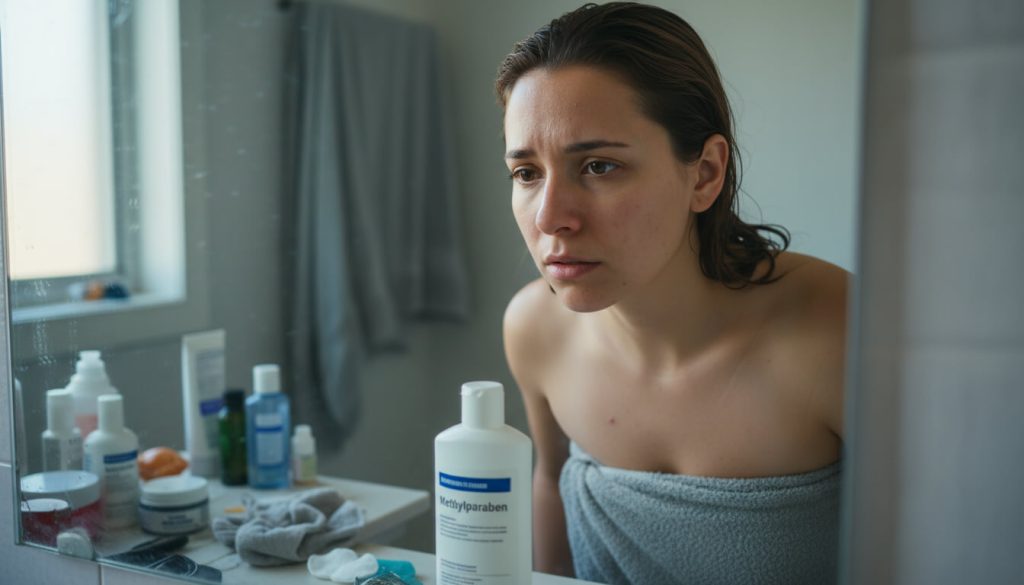
Methylparaben shows up in many skincare and cosmetic formulas because it helps preserve products and prevent microbial growth.
If you have acne-prone skin, though, it is normal to wonder whether that same ingredient could contribute to clogged pores or breakouts.
In this guide, we’ll break down what methylparaben actually does, how it fits into the comedogenic scale, and what matters most when you are choosing acne-safe products.
Is Methylparaben Comedogenic?
Short answer: methylparaben is not generally considered a pore-clogging ingredient.
It is a preservative, not a heavy oil, butter, or wax, so it does not usually act like classic pore occlusion ingredients.
That said, skin care is never just one ingredient.
A formula can still cause breakouts if it contains heavier emollients, fragrance, or irritating extras.
What comedogenic means in skincare
Comedogenic means an ingredient may contribute to comedones, which are clogged pores.
Those clogs can start as tiny microcomedones inside the follicular infundibulum, the opening of the hair follicle.
When sebum builds up inside that follicle, the pore can become blocked.
That process matters for acne-prone skin because blocked pores can turn into visible pimples later.
Why preservatives usually rank differently from oils and waxes
Preservatives like methylparaben do a different job than oils and waxes.
They help stop microbes from growing, especially in water-based cosmetics.
Because of that, they are not usually the main driver of pore-clogging.
Ingredients that sit heavily on the skin tend to matter more on the comedogenic scale.
🚫 A preservative is usually not the same kind of risk as a thick, occlusive oil.
Is Methylparaben Safe for Acne-Prone Skin?
For most people, methylparaben is unlikely to worsen acne-prone skin on its own.
The bigger question is whether the whole product suits your skin type and routine.
If you break out after using a product with methylparaben, do not assume the preservative is the culprit.
The issue may be the texture, fragrance, or another ingredient in the formulation.
low risk
Lightweight cleanser, watery serum, or rinse-off product.
medium risk
Rich moisturizer with several heavy emollients and fragrance.
When methylparaben is unlikely to be the problem
Methylparaben is usually fine in rinse-off products like cleansers.
It also tends to be less noticeable in light leave-on formulas with modest concentration.
That matters because acne-prone users often react more to the vehicle than the preservative.
A gel moisturizer and a thick balm can behave very differently on oily skin.
When a product may still cause breakouts
Breakouts can happen when a formula layers too many pore-clogging ingredients together.
Fragrance, certain esters, and rich oils can all raise the risk.
Sensitized skin may also react with redness or bumps that look like acne.
That is irritation, not always classic clogging.
What Is the Comedogenic Rating of Methylparaben?
Methylparaben is not usually given a high, meaningful comedogenic rating in mainstream references.
That is because it is not a classic clogging emollient.
The comedogenic rating system runs from 0 to 5.
Lower numbers suggest less chance of clogging pores, while higher numbers suggest more concern.
| Rating | What it means | Practical takeaway |
|---|---|---|
| 0 | No known clogging risk | Usually acne-friendly |
| 1 | Very low risk | Often fine for oily skin |
| 2-3 | Moderate risk | Watch the full formula |
| 4-5 | Higher risk | More likely to clog pores |
The comedogenic scale from 0 to 5
The scale sounds simple, but real skin is messier than a number.
Two people can use the same product and get very different results.
That is why dermatology guidance often focuses on the whole formula, not one ingredient alone.
Skin type, sebum, and product texture all matter.
Why comedogenic ratings are imperfect
Many ratings come from older rabbit-ear testing, which does not perfectly match human skin.
That makes the numbers a useful clue, not a final verdict.
Concentration matters too.
An ingredient can behave differently at tiny levels than it does in a richer formula.
Does Methylparaben Cause Breakouts or Irritation?
Breakouts and irritation are not the same thing.
A breakout usually means clogged pores or acne lesions, while irritation can mean redness, itching, or stinging.
Methylparaben is more often discussed as a cosmetic ingredient and preservative than as a direct breakout trigger.
Still, any product can bother sensitized skin.
Breakouts vs irritation: not the same thing
Acne vulgaris often starts deeper in the pore with sebum and dead skin buildup.
Irritation shows up faster and may feel hot, tight, or itchy.
If your skin is reacting right away, the formula may be irritating your barrier.
That is different from a true clogged-pore problem.
Why one person may react and another may not
Skin barrier strength varies from person to person.
So does sensitivity to fragrance, preservatives, and active ingredients.
One person may use the same moisturizer for months without trouble.
Another may break out after two uses because the rest of the formula is too rich.
Where Is Methylparaben Found in Skincare and Cosmetics?
You will most often find methylparaben in products that need shelf-life protection.
It helps prevent contamination in many water-based cosmetics and skincare products.
That means it can appear in both leave-on product and rinse-off product categories.
It is common in everyday routines, not just “problem” products.
Common product categories
Look for methylparaben in moisturizers, sunscreens, makeup, cleansers, and some anti-acne products.
It may also appear in lotions and creams that sit on the skin for hours.
It often shows up with other parabens or preservatives.
That combination helps keep the formula stable and safe to use.
How methylparaben appears on labels
On an ingredient list, you may see “methylparaben” spelled clearly.
You might also see it grouped with other parabens near the end of the list.
If you are scanning labels, read the whole deck instead of stopping at the front claim.
Marketing words can be helpful, but the label tells the truth.
What Makes a Product More Likely to Clog Pores Than Methylparaben Does?
Most pore-clogging risk comes from the whole formula, not methylparaben itself.
That is why one product can feel acne-safe while another causes bumps fast.
Heavy oils, butters, waxes, and some esters are more likely to trap sebum.
Those ingredients can increase pore-clogging risk in acne-prone skin.
Ingredients that matter more for comedogenic risk
Watch for rich emollients, heavy occlusives, and thick waxy bases.
They can sit on the skin and make clogging more likely.
For example, a formula with Isopropyl Myristate or similar high-risk ingredients deserves more scrutiny than methylparaben alone.
That is where many breakouts start.
Why ingredient order matters
Ingredients near the top usually appear at higher concentration.
Ingredients near the end are usually present in smaller amounts.
So yes, concentration matters.
A tiny amount of a preservative is not the same as a rich oil blend.
How to Check If Skincare Ingredients Clog Pores
Reading labels can feel exhausting, right?
Skincare names are long, marketing claims are vague, and ingredient lists hide the details you actually need.
That is exactly why tools like ReadLabel can help acne-prone shoppers move faster.
The app scans ingredient lists, spots potential pore-clogging ingredients, and turns them into plain-language guidance.
If you are standing in a store wondering, “Will this clog my pores?”, ReadLabel is built for that moment.
It lets you check a product label quickly, without hours of manual research.
- Scan the ingredient list with your camera.
- Let the app extract and analyze the formula.
- Check for pore-clogging ingredients and preservatives.
- Decide whether the product fits your skin goals.
That workflow fits how real people shop.
You do not need to become a cosmetic chemist to make safer choices.
Methylparaben vs Other Parabens: Should You Worry More About One Than Another?
Methylparaben is part of the larger parabens family.
Other examples include propylparaben and butylparaben.
For pore clogging, the difference between these names usually matters less than the formula itself.
Consumer concern is often broader than comedogenicity.
Why “paraben-free” labels are often marketing-first
“Paraben-free” can sound safer, but it is often a marketing cue first.
That claim does not automatically mean the product is acne-friendly.
A paraben-free cream can still contain heavy oils or waxes.
Those ingredients may clog pores more than a preservative ever would.
What matters more than the specific paraben name
Look at product type, concentration, and the rest of the ingredient deck.
A lightweight formula with methylparaben may suit acne-prone skin better than a thick “natural” balm.
That is why label reading beats label chasing every time.
It gives you the full picture.
Can Methylparaben Be Used in Non-Comedogenic Products?
Yes, a product can still be labeled non-comedogenic and contain methylparaben.
That is because the claim applies to the whole formula, not a ban on every preservative.
Non-comedogenic is helpful, but it is not a guarantee.
Brands use the term in different ways, and the rule is not equally strict everywhere.
Non-comedogenic is a formula claim, not an ingredient ban
A formula can contain a preservative and still be designed to avoid pore blockage.
That is especially common in modern skincare made for oily skin.
So do not panic when you see methylparaben on a label.
First, check what else is in the product.
How to judge whether the claim is trustworthy
Start with the ingredient list, then check the product type and texture.
Finally, remember your own skin history.
If rich creams have broken you out before, be cautious with heavy formulas.
If light lotions usually work, methylparaben is probably not your main concern.
Should You Avoid Methylparaben If You Have Sensitive Skin?
Sensitive skin needs a different kind of caution.
The issue may be irritation rather than clogging.
If your skin reacts easily, preservatives, fragrance, and active ingredients can all become problems.
That does not mean methylparaben is comedogenic.
Patch testing and red-flag symptoms
Patch test a new product on a small area first.
Watch for stinging, redness, itching, swelling, or a rash.
If those symptoms show up, stop using the product.
Your skin is telling you something important.
When to stop using a product
Stop right away if you notice burning, swelling, or worsening redness.
Those are stronger warning signs than a simple pimple.
If you only see one small bump, watch closely before blaming methylparaben.
The full formula may still be the real issue.
Evidence and Limitations: What the Science Actually Says About Methylparaben
The science around methylparaben gets discussed in two different ways.
One is pore clogging, and the other is broader safety debate.
Those are separate topics.
A preservative can be low on the comedogenic scale while still being debated for other reasons.
Comedogenic evidence vs hormone-safety debates
Most consumers search methylparaben because they want to know if it clogs pores.
That is a practical acne question.
Other searches focus on endocrine disruptor concerns, which are about potential hormonal effects.
That is not the same as acne risk or pore occlusion.
Why consumers still search for methylparaben
People want clean, clear answers before they buy products.
They also want to trust the ingredient list.
That is why simple, honest guidance matters.
It helps you shop with less anxiety and fewer regrets.
Best Ways to Choose Acne-Safe Preservative Systems
Preservatives are necessary in many water-based products.
Without them, formulas can spoil or grow microbes.
The goal is not to fear preservatives.
The goal is to choose formulas that respect your skin.
What to look for in a formula
Choose lightweight textures when possible.
Look for shorter ingredient lists, clear labeling, and fewer heavy occlusives.
If you know certain oils or esters break you out, avoid them first.
That small habit can save a lot of trial and error.
What not to overreact to
Do not assume every preservative is a pore-clogger.
That jump is usually too broad.
Instead, ask a better question: does the full product fit my skin type?
That one question leads to smarter shopping.
Final Thoughts on Methylparaben and Clogged Pores
Methylparaben is not generally considered a pore-clogging ingredient.
For most acne-prone users, the bigger risk comes from the overall formula.
If a product causes breakouts, look at the texture, concentration, and other ingredients first.
That approach is more useful than blaming methylparaben alone.
The best next step is simple: read the label carefully, then choose products that match your skin.
If you want help doing that faster, use a scanner like ReadLabel before you buy.
Frequently Asked Questions
Does methylparaben cause acne?
Methylparaben is not typically considered an acne-causing ingredient. If a product breaks you out, the cause is more likely the overall formula, irritation, or another ingredient in the product.
Is methylparaben non-comedogenic?
Methylparaben is generally treated as low-risk for clogging pores. It is a preservative, so it is not in the same comedogenic category as heavy oils, butters, or waxes.
Can methylparaben be used on oily skin?
Yes, methylparaben is usually fine for oily skin because it is not a typical pore-clogging emollient. Your skin may still react to the full product if it contains heavier ingredients or irritants.
Why do some people avoid parabens if they don’t clog pores?
Many people avoid parabens for preference, transparency, or broader safety concerns rather than comedogenicity. That concern is separate from whether an ingredient clogs pores.
Is methylparaben safe in moisturizers?
In many formulas, yes. A moisturizer can contain methylparaben and still be acne-friendly if the rest of the formula is lightweight and non-comedogenic.
What ingredient names should I look for if I want to avoid parabens?
Look for methylparaben, propylparaben, butylparaben, and ethylparaben on ingredient labels. Brands may also say “paraben-free” on the front of the package, but the ingredient list is the most reliable source.
Does a small amount of methylparaben matter?
Usually not for pore clogging. Comedogenic risk is more affected by the full formulation and the concentration of heavier ingredients than by methylparaben alone.