

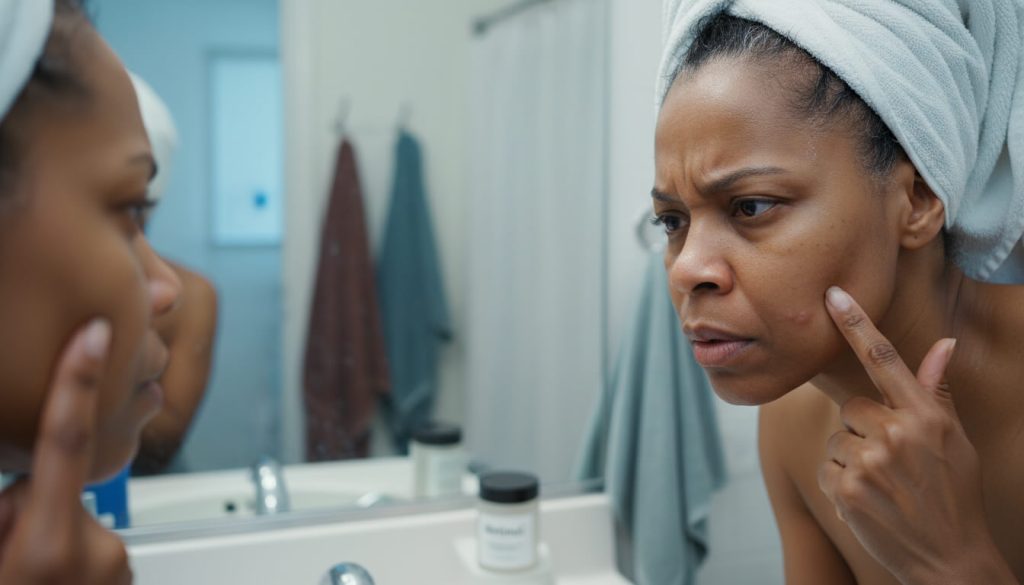
Retinol is one of the most searched skincare ingredients because it sits at the center of both acne and anti-aging routines.
If you’ve ever wondered whether Does Retinol Clog Pores, the answer depends on retinol itself, the formula it’s in, and how your skin responds to it.
Here’s what to know before adding it to your routine.
Is Retinol Comedogenic?
Short answer: retinol is generally not comedogenic, so it usually does not clog pores. In many routines, it actually helps reduce pore occlusion by keeping dead skin cells from stacking up.
Comedogenic means an ingredient may form comedones, which are clogged pore bumps. Those bumps include blackheads and whiteheads, and they often start deep inside the pore.
💡 The key point is simple: retinol is not the usual pore-clogging problem. The full product formula matters more.
Retinol is a topical retinoid, which means it comes from vitamin A. It supports cell turnover, which helps skin shed old cells faster.
That matters because clogged pores often begin when dead skin cells and sebum mix together. When that mix builds up, microcomedones can form in the follicular infundibulum.
What comedogenic really means
Dermatologists use comedogenic to describe ingredients that may block pores. A pore-blocking ingredient can leave skin feeling heavy, greasy, or congested.
But one ingredient does not tell the whole story. A rich cream can feel cloggy even when the active ingredient is not the problem.
Retinol: usually helps keep pores clearer by speeding turnover.
Pore-clogging ingredients: may form buildup that traps dead skin and oil.
If you want the simple answer to Does Retinol Clog Pores, think of retinol as pore-safe for most people. The base formula is where many surprises hide.
Is Retinol Safe for Acne-Prone Skin?
Yes, retinol is often a smart choice for acne-prone skin. Dermatologists commonly use retinoids to help acne vulgaris, blackheads, and whiteheads.
Why? Retinol helps normalize keratinization, which is the process that controls how skin cells shed. When that process works better, fewer microcomedones form.
Good news for oily skin: retinol may help skin look less congested over time. It is not an oil-control treatment, but it can improve texture.
That said, acne-prone skin can still react badly to irritation. Redness, dryness, and inflammation can make skin feel worse before it feels better.
Some people think retinol “broke them out,” but the real cause may be dermatitis or a poor formula fit. Sound familiar? That confusion happens a lot.
Acne-safe support matters too
Retinol works best with non-comedogenic support products. A gentle cleanser and light moisturizer can make a big difference.
Many people pair retinol with Squalane because it often feels lighter than heavy balms. That can matter when you already have oily skin.
Still, every routine is different. Your moisturizer, sunscreen, and cleanser can change the whole experience.
What Is the Comedogenic Rating of Retinol?
Retinol is generally considered low on the comedogenic scale. In practical terms, it is not treated as a typical pore-clogger.
The comedogenic scale usually runs from 0 to 5. A lower number means less chance of clogging pores, while a higher number suggests more risk.
| Rating | Meaning |
|---|---|
| 0 | Very unlikely to clog pores |
| 1-2 | Low risk for most users |
| 3 | Possible concern for acne-prone skin |
| 4-5 | Higher clogging risk |
That said, a rating is not a promise. Real skin reacts to concentration, texture, and the rest of the formula.
⚠️ A product can be “retinol” on the front and still contain pore-clogging ingredients in the base.
So if you are asking Does Retinol Clog Pores, the more useful question may be this: what else is inside the product?
How to Check If Skincare Ingredients Clog Pores
Reading ingredient labels can feel like a puzzle. Hidden pore-cloggers often sit inside moisturizers, sunscreens, and even cleansers you use with retinol.
That is why many acne-prone users scan the full formula before buying. It saves time and helps you avoid products that look gentle but act heavy on skin.
✅ Want a faster way to spot hidden pore-cloggers? ReadLabel scans skincare ingredient lists and shows you potential breakout risks in plain language.
ReadLabel is an AI-powered ingredient scanner built for people who ask, “Will this clog my pores?” It reads the actual ingredient list, not just a barcode.
That makes it useful for checking a moisturizer, sunscreen, serum, or cleanser in seconds. If you shop for acne-safe products, that can be a real game changer.
Want to go deeper? Start by scanning the products you use with retinol. Then check whether any hidden pore-clogging ingredients are sitting in the rest of your routine.
Retinol Purging vs. True Breakouts: How to Tell the Difference
This is where a lot of people get stuck. A new retinol routine can cause a breakout-like phase, but that does not always mean clogged pores.
Purging happens when increased cell turnover brings existing microcomedones to the surface faster. True breakouts, on the other hand, come from irritation, bad formula fit, or both.
What retinol purging usually looks like
Purging usually shows up where you already break out. It often appears as small bumps, whiteheads, or faster versions of your usual acne pattern.
It also tends to happen early, often in the first few weeks. If the reaction slowly improves, that points more toward purging.
“Purging is a speed-up, not a clog-up.”
Signs it’s irritation, not purging
Irritation feels different. Burning, tightness, peeling, and widespread redness usually mean your skin barrier is stressed.
If the breakouts spread to new areas or keep getting worse, that is a warning sign. In that case, the formula may be too strong or too harsh.
Quick rule: purging should fade. Irritation usually keeps escalating.
Why Retinol Helps Unclog Pores
Retinol can help unclog pores because it speeds exfoliation at the cellular level. That means dead skin cells do not sit around as long.
It also helps normalize how the pore lining sheds. When that process stays smooth, comedones have a harder time forming.
Retinol and cell turnover
Think of cell turnover as your skin’s cleanup cycle. Retinol helps that cycle move along more efficiently.
That can reduce the buildup that leads to blackheads and whiteheads. Over time, skin texture often looks smoother too.
Retinol and sebum balance
Retinol does not stop oil production the way a mattifying product might. Still, it can help oily skin look less congested.
When sebum and dead skin cells pile up together, pores look busier. Retinol helps interrupt that pattern.
For people using prescription retinoids, the same idea applies, but the strength is different. Adapalene and tretinoin are usually more direct acne tools.
What Can Make a Retinol Product Feel Pore-Clogging?
Sometimes the retinol is fine, but the vehicle is not. Creams, balms, and rich emollient formulas can feel heavy on acne-prone skin.
That is why two retinol products can behave very differently. One may feel light and clear, while another leaves skin congested.
Ingredients like isopropyl myristate can be a bigger concern than retinol itself. A thicker base may also trap sweat and sebum more easily.
For some people, even Caprylic Capric Triglyceride can be worth checking when skin is easily clogged. Formulation matters more than marketing.
Creams vs serums vs gels
Serums and gels usually feel lighter. They often work better for oily skin or acne-prone skin.
Creams can still work well, especially for dry skin. But richer textures may raise the risk of that “pore-clogging” feeling.
Hidden pore-cloggers in the full ingredient list
Fragrance, heavy oils, waxes, and some emollients can bother sensitive skin. They may not clog every pore, but they can still trigger breakouts.
That is why ingredient checking is so useful. It helps you spot the real problem fast.
How to Use Retinol Without Triggering Breakouts
The safest way to use retinol is to start slow. Your skin barrier needs time to adjust.
- Use it at night only.
- Start with a pea-sized amount.
- Apply it two to three nights a week.
- Moisturize well.
- Wear sunscreen every morning.
That routine helps reduce dryness and inflammation. It also lowers the chance that you confuse irritation with purging.
Start with low frequency and low strength
Beginners usually do better with lower concentrations. A slow ramp-up gives your skin time to adapt.
If your face stings after every use, back off. More is not better here.
Pair retinol with barrier-supporting skincare
Look for ceramides, glycerin, and hyaluronic acid. These ingredients support hydration and help calm dryness.
- Use a non-comedogenic moisturizer.
- Avoid harsh scrubs on retinol nights.
- Keep sunscreen in your morning routine.
- Stop if irritation becomes severe.
That simple setup often works better than layering too many actives. Your skin usually prefers calm consistency.
Retinol vs Other Retinoids for Acne-Prone Skin
Retinol is the gentler OTC option in the retinoid family. Adapalene and tretinoin are usually stronger and more acne-focused.
None of these are known for clogging pores. The bigger difference is how much irritation each one may cause.
Retinol: slower, gentler, and often used for beginners.
Adapalene and tretinoin: stronger options for acne-prone skin, but often more irritating.
If you have oily skin and want a starter retinoid, retinol can be a good entry point. If acne is more stubborn, a dermatologist may suggest a prescription retinoid instead.
Who Should Be Cautious With Retinol?
Retinol is not ideal for everyone. Very sensitive skin may react with dryness, peeling, and inflammation.
People with rosacea-prone skin, eczema-prone skin, or a damaged skin barrier should move carefully. The concern is irritation, not pore clogging.
Sensitive or dehydrated skin
Dry skin can make pores look more noticeable. It can also make retinol feel harsher than it really is.
If your skin feels tight, focus on hydration first. Then reintroduce retinol more slowly.
Oily and acne-prone skin
Oily skin often tolerates retinol well once it adjusts. In fact, this skin type may benefit the most from it.
Still, even oily skin needs a gentle start. Jumping in too fast can cause unnecessary redness.
Can Retinol Make Pores Look Bigger Before They Look Better?
Yes, sometimes it can seem that way. Dryness and inflammation can make pores appear more obvious.
That does not mean the pores are actually growing. It often means the skin surface looks rougher or tighter.
Dehydration and texture changes
When skin is dry, fine lines and pore edges stand out more. Makeup may settle differently too.
That can make people think the product is clogging pores. Often, the skin just needs more moisture.
Long-term pore appearance improvements
With steady use, retinol may improve texture and support collagen production. That can make pores look less noticeable over time.
Consistency matters more than intensity. Slow, steady use usually wins.
Final Thoughts on Retinol and Clogged Pores
So, does retinol clog pores? For most people, no. Retinol is generally non-comedogenic and often helps prevent clogged pores instead of causing them.
If you break out after starting it, look at purging, irritation, and the product base. Those are usually the real reasons.
The smartest move is to choose a well-formulated retinol, start slowly, and keep the rest of your routine acne-safe. If you want extra certainty, scan your products before you buy them.
✅ Take one minute today to check your moisturizer, cleanser, and sunscreen for hidden pore-cloggers. That small step can save your skin a lot of stress.
Frequently Asked Questions
Does retinol clog pores?
No, retinol is generally not considered pore-clogging. In many cases it actually helps keep pores clearer by reducing dead skin cell buildup.
Can retinol cause acne at first?
Yes, retinol can cause a temporary purge or irritation when you first start using it. That does not mean it is clogging pores.
Is retinol non-comedogenic?
Retinol is typically treated as non-comedogenic. However, the full formula around it may still contain pore-clogging ingredients.
Why does my skin break out after starting retinol?
Your skin may be purging, irritated, or reacting to the product base. If the breakouts persist or become painful, the formula may not be right for your skin.
Is retinol good for oily skin?
Yes, oily skin often does well with retinol because it can help reduce congestion and improve texture. Starting slowly is still important.
Can I use retinol if I have sensitive skin?
Yes, but sensitive skin usually needs a lower strength and slower schedule. Pair it with a gentle, non-comedogenic moisturizer.
Should I stop retinol if I get small bumps?
Not always, because small bumps can be part of purging early on. If the bumps are widespread, painful, or keep getting worse, stop and reassess the formula.
Want the quickest next step? Scan the rest of your routine with ReadLabel and see whether another product is the real pore-clogging culprit.