
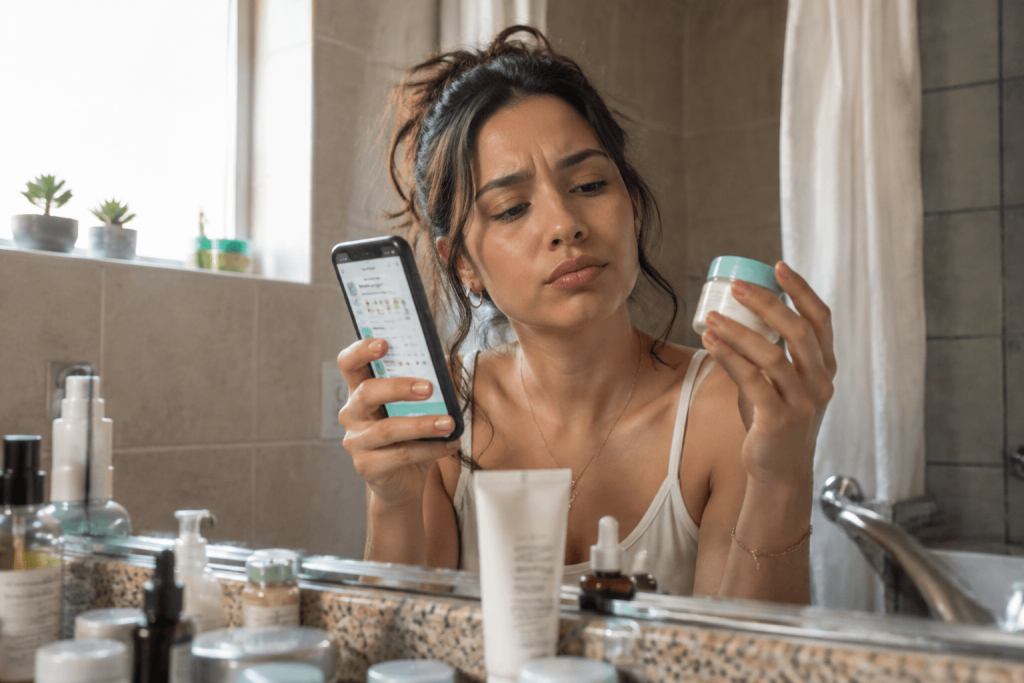
The pore clogging checker app update 2026 is here for people who want a current, reliable way to check skincare ingredients fast. ReadLabel is built for that exact moment when you ask, “will this clog my pores?”
What the updated app does now
The updated pore-clogging checker app scans ingredient lists from a photo and flags ingredients that may be pore-clogging. It is designed for acne-prone, congestion-prone, and sensitive-skin users who want a quick answer before buying.
You can use it to:
- Take a photo of an ingredient list
- Upload an existing ingredient-list photo
- Scan the label with your camera
- Scan a product barcode when that is the fastest path
Why this 2026 update matters
This page is for users who want freshness, not just another old web analyzer. ReadLabel is positioned as a maintained skincare ingredient scanner app with current support for people who want to check products now.
That matters because older tools can feel slow, dated, or vague. A modern 2026 ingredient checker app should be quick to open, easy to scan, and clear about what the result means.
How the checking flow works in the app
The workflow is built for speed. You point your camera at the ingredient list, and ReadLabel reads the text for you.
Typical flow:
- Open the app
- Scan an ingredient-list photo or upload one
- Review the flagged ingredients
- Decide whether the product looks acne safe for you
That makes it easier to check products in-store or at home without manually decoding a full ingredient list.
What the result means for acne-prone users
A result in ReadLabel is a risk signal, not a medical diagnosis. The app helps you spot possible comedogenic ingredients so you can make a faster buying decision.
That is useful because the same product can behave differently depending on:
- Formula concentration
- The full product mix
- Your skin’s own sensitivity
- Conflicting comedogenicity data across sources
How ReadLabel differs from older web checkers
A lot of people still search for a pore clogging checker online or compare against older databases like CosDNA or INCI Decoder. Those tools can be useful, but they are often web-first and less built for quick mobile use.
ReadLabel is designed around a mobile-first scanning workflow and a cleaner acne-focused experience. It also reads the actual ingredient list from the product, which makes it more flexible than barcode-only checking.
| Check type | ReadLabel | Older web analyzers |
|---|---|---|
| Scan a label photo | Yes | Sometimes |
| Use on the go | Yes | Often slower |
| Check unlabeled or niche products | Yes | Limited by database coverage |
| Fast acne-focused result | Yes | Varies |
| Clear mobile workflow | Yes | Often less streamlined |
Database freshness and support signals
People looking for a pore clogging app update usually want one thing: proof that the checker is still current. ReadLabel is built as an actively maintained tool, with ongoing support for ingredient scanning and updated product use.
If you care about the latest app version and current support, this is the right place to start. The goal is simple: open the app, scan the label, and get a current answer without extra friction.
Who should use this app
This checker is a strong fit if you are:
- Acne-prone and trying to avoid hidden pore cloggers
- Congestion-prone and checking new products carefully
- Sensitive-skin and want a simpler buying filter
- Looking for a non comedogenic checker you can use quickly on mobile
- Tired of manually comparing ingredient lists before every purchase
Barcode scanning is helpful, but ingredient scanning is stronger
Barcode lookup can be convenient, but it is not always enough. A barcode-only result depends on the product already being in a database, while ingredient-list scanning can analyze much more directly.
That is why ReadLabel focuses on the ingredient list itself. It gives you a better shot at checking the exact formula in front of you, not just the product name.
Free trial and getting started
If you want to test the current app before committing, ReadLabel includes a 3-day free trial. That makes it easy to see whether the workflow feels fast enough for your routine.
If you want the current version of a pore clogging checker app that is ready for 2026 use, this is the easiest way to start.
Try the current pore-clogging checker now
Open ReadLabel and scan a skincare label when you want a quick answer on whether a product may be pore-clogging. It is built for people who want a clearer, faster way to shop with more confidence.
If you want the core checker page instead of the update/status view, see the pore clogging checker.
FAQ
What app checks if skincare ingredients clog pores?
ReadLabel checks skincare ingredient lists for potential pore-clogging ingredients. You scan a label photo, and the app flags ingredients that may matter for acne-prone users.
Is there an app that scans skincare ingredients?
Yes. ReadLabel scans ingredient-list photos from skincare and cosmetic products, so you can check a formula quickly from your phone.
What does a pore-clogging result mean?
It means the app found ingredients that may raise concern for pore clogging. It is a helpful screening result, not a medical diagnosis.
Can I use barcode-only checking instead of scanning the label?
You can use barcode scanning when it is available, but full ingredient-list scanning is more direct. Barcode lookup depends on database coverage, while label scanning reads the formula itself.
How often is the database updated?
The app is positioned as actively maintained for current use in 2026. That matters because ingredient-checking tools are only useful when their coverage stays current.
Who is this app best for?
It is best for acne-prone, congestion-prone, and sensitive-skin users who want a fast way to check whether a product may be acne safe before they buy it.