
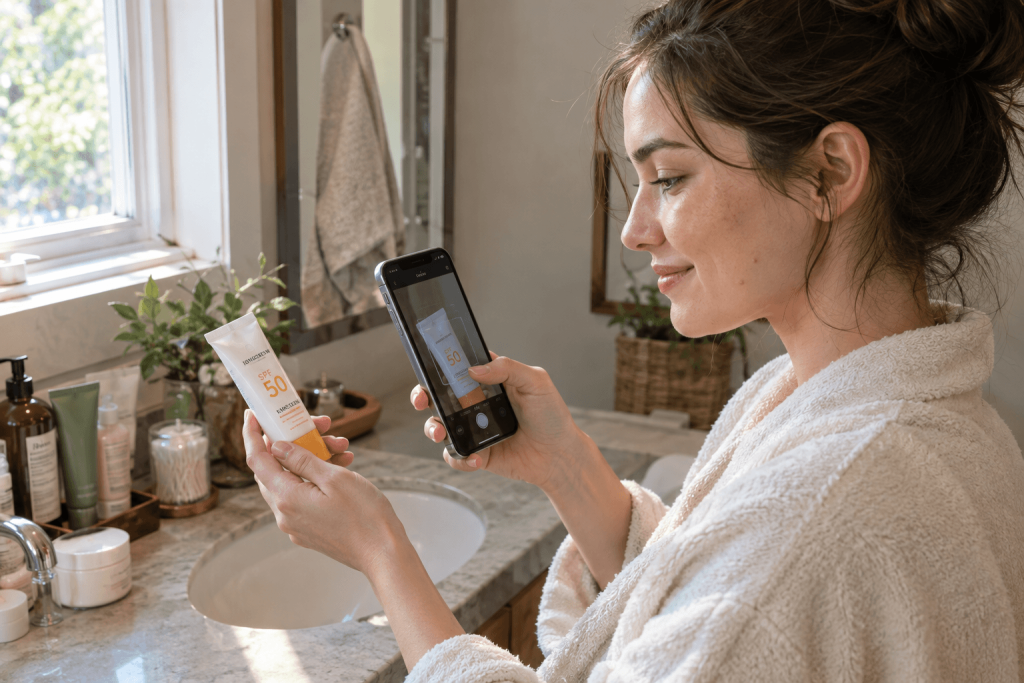
The non pore clogging checker helps you quickly see whether a skincare or cosmetic product is likely safe for acne-prone skin. With ReadLabel, you can scan an ingredient label from a photo and get a clear pore-clogging risk check in seconds.
Scan a product and check for hidden pore cloggers
ReadLabel is built for fast product-level checking, not slow ingredient research. It reads the actual label on the product and flags ingredients that may be comedogenic or otherwise risky for breakout-prone skin.
Use it when you want to know:
- “Will this clog my pores?”
- whether a product looks non-comedogenic
- if a formula seems pore-safe for acne-prone skin
- whether a cleanser, serum, moisturizer, or makeup item is a smart buy
How the non pore clogging checker works
The checker is simple to use on mobile. You just capture the ingredient list from a product, and ReadLabel analyzes it for pore-clogging risk.
- Open the app.
- Take a photo of the ingredient list.
- Upload an existing photo if you already have one.
- Let the skincare scanner flag potentially clogging ingredients.
- Review the result before you buy, apply, or keep the product.
This is useful when ingredient names look confusing or marketing claims feel vague. You get a faster answer than digging through a static comedogenic checker list.
Who this checker is for
This tool is for shoppers who want a safer skincare decision, not a long lesson in skincare science. It is especially useful for:
- acne-prone skin
- oily or breakout-prone skin
- sensitive skin users who react easily
- anyone trying to build an acne safe routine
- shoppers comparing non-comedogenic skincare options in-store or online
If your main question is whether a product is likely to trigger a breakout, this page is for you.
Why a photo-based checker is better than a static ingredient list
Many pages only show a copied list of comedogenic ingredients. That can help, but it does not tell you much about the actual product you are holding.
A photo-based ingredient checker is more practical because it can:
- analyze the real label on the package
- work with products that are not in a database
- give faster decision support before purchase
- show results in plain language instead of raw ingredient jargon
That makes ReadLabel more useful than a generic pore clogging product checker or a forum thread you have to interpret yourself.
What makes ReadLabel different
Unlike barcode-only apps, ReadLabel reads the ingredient list itself. That means you can check almost any product, even if it is new, niche, or not yet indexed.
You also get clearer guidance than a simple red flag. The app is designed to help you decide whether a product feels acne-safe, not just to label it and leave you guessing.
Non-comedogenic vs pore-clogging: what the checker is looking for
When people search for a non-comedogenic product checker, they usually want the same thing: a fast way to avoid products that may clog pores. Non-comedogenic usually means a product is designed to be less likely to block pores, while pore-clogging means it may contain ingredients that raise that risk.
That label is helpful, but it is not a guarantee. Formula, concentration, and your own skin response still matter, which is why scanning the full ingredient list is more useful than trusting the front of the package.
Before you buy: what to check in a product
A quick scan can save you from buying something that looks clean but hides problem ingredients. It is especially helpful before you commit to:
- moisturizers
- sunscreens
- makeup
- serums
- face oils
If you want a deeper reference page for ingredient screening, you can also use the pore clogging checker.
Built for quick, low-friction checking
ReadLabel is designed to feel fast and easy in the moment. That matters when you are standing in a store, comparing products online, or trying to figure out why something may have broken you out.
You can also start with the 3-day free trial if you want to test the app before deciding whether it fits your routine.
Important limits to keep in mind
A non pore clogging checker can help you make better decisions, but it cannot promise that every product will work for every person. Ingredient context, the full formula, and individual skin response all matter.
That is why the best use of the checker is practical decision support. It helps you reduce risk before you buy, but it does not replace how your own skin actually reacts.
FAQ
How do I know if my skincare is pore clogging?
The fastest way is to scan the ingredient list with ReadLabel and review the pore-clogging risk before you use the product. This is more reliable than judging by the front label alone.
What ingredients are most likely to clog pores?
Certain ingredients are commonly flagged as higher risk in comedogenic ingredients checkers, but the exact result depends on the full formula. A label scan helps you spot those risks without guessing.
Is there an app to check comedogenic ingredients?
Yes. ReadLabel is a mobile-first ingredient checker that scans product labels and flags potentially pore-clogging ingredients in plain language.
Are pore-clogging ingredient checkers accurate?
They are useful for screening products quickly, but they are not perfect. Accuracy depends on the formula, ingredient concentration, and how your skin responds.
What does non-comedogenic actually mean?
It means a product is intended to be less likely to clog pores. It does not guarantee that every acne-prone person will tolerate it.
Can non-comedogenic products still cause breakouts?
Yes. Even non-comedogenic skincare can still cause breakouts for some people because skin response varies from person to person.