
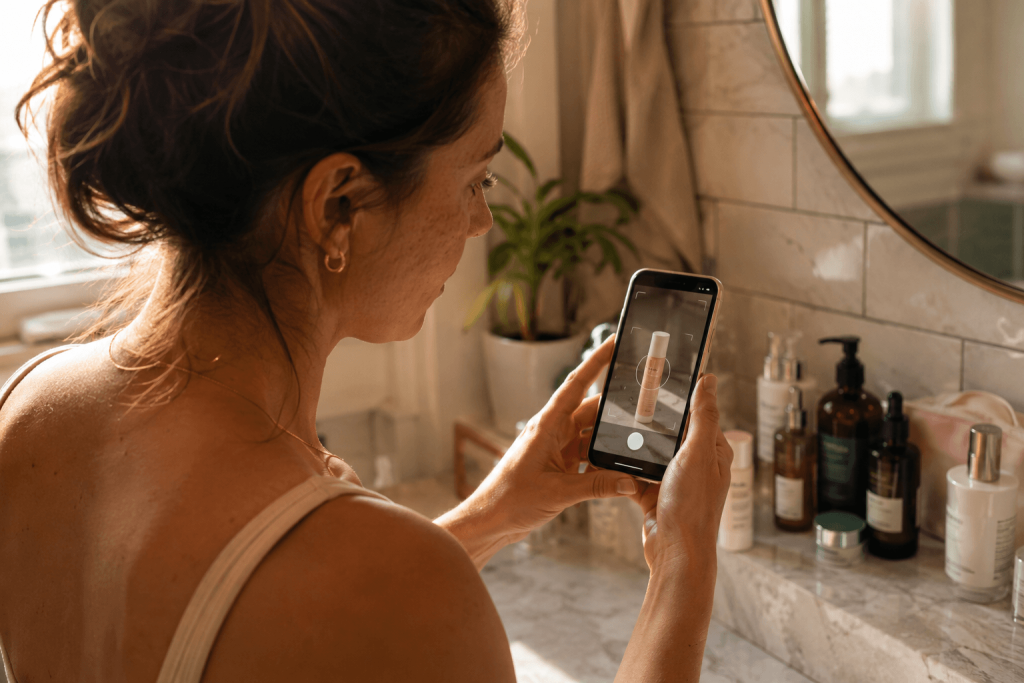
The lip balm pore clogging checker helps you spot ingredients that may trigger breakouts before you buy or use a product. With ReadLabel, you can scan a photo of the ingredient list and get a fast, plain-language result.
Scan a lip balm ingredient list in seconds
The fastest way to check a lip balm is to take a photo of the ingredient list with your phone. ReadLabel reads the label from the image and flags potentially comedogenic ingredients right away.
Use it when you want to know:
- whether a balm is acne safe
- whether a formula may be pore clogging around the mouth
- whether a product marked non-comedogenic actually looks safer on the label
- whether an ingredient list hides a breakout trigger
This is built for the real shopping moment. You are looking at a tube, a tin, or a balm stick and asking, “will this clog my pores?”
Why lip balm can cause clogged pores around the mouth
Lip balm can contribute to clogged pores when product transfers to the skin around the lips or sits heavily on acne-prone areas. That risk matters most for people who break out along the lip line, chin, or surrounding skin.
A pore clogging checker is useful here because lip products often contain occlusive formulas, waxes, oils, and butters. Those formulas are not automatically bad, but they are worth checking if you are breakout-prone.
What ReadLabel looks for in lip balm formulas
ReadLabel scans the actual ingredient list from a photo and highlights ingredients that may be risky for acne-prone users. It is a lip product ingredient scanner designed for quick decisions, not guesswork.
Common things users check for include:
- Lanolin
- Coconut oil
- Isopropyl myristate
- heavy waxes
- rich butters
- occlusive oils in dense formulas
If you are comparing products like CeraVe Healing Ointment or Aquaphor, the goal is the same: check the label fast and decide with more confidence.
How to check if your lip balm is pore clogging
Use ReadLabel whenever you want a quick lip balm ingredient checker on the go. The workflow is simple.
- Open the app.
- Take a photo of the ingredient list.
- Upload an existing product photo if you already saved one.
- Let ReadLabel scan the label.
- Review the ingredients it flags for pore-clogging risk.
This is especially useful on mobile when you are standing in the store and need a fast answer.
Non-comedogenic claims are not the same as a full ingredient review
A product label saying non-comedogenic can be helpful, but it is not a guarantee that the formula will work for every acne-prone person. The best check is still the full ingredient list.
That is why ReadLabel is useful as an ingredient list pore clogging scanner. It helps you verify the formula itself instead of relying only on marketing claims.
If you already use a lip balm and keep breaking out
If a balm seems to make you break out around the mouth, stop guessing and scan the label. A quick comedogenic lip balm checker can help you identify whether the formula contains ingredients you may want to avoid next time.
This is also helpful if you are trying to compare:
- a non comedogenic lip balm claim versus the actual formula
- an everyday balm versus a richer overnight balm
- a lip product that feels great versus one that may be too heavy for acne-prone skin
For a broader check beyond lip products, you can also use the pore clogging checker for other skincare items.
Common lip balm ingredients people ask about
People often check the same types of ingredients when they want an acne safe lip balm checker. The concern is usually not one ingredient alone, but the full formula.
Typical search questions include:
- Is petroleum jelly comedogenic?
- Is lanolin pore clogging?
- Is coconut oil in lip balm acne causing?
- Do waxes clog pores?
- Are butters safe for acne-prone skin?
ReadLabel helps by flagging the label quickly so you can make a buying decision without parsing every name yourself.
When a lip balm check matters most
A lip balm pore clogging scan matters most when you are already breakout-prone, react to heavy formulas, or notice acne around the mouth. It is also useful when a product feels fine on the lips but seems to transfer to nearby skin.
Use the app before you buy, before you apply a new balm, or whenever you want a second opinion on a formula.
FAQ
Can lip balm clog pores?
Yes. Some lip balm formulas can clog pores, especially if they transfer to acne-prone skin around the mouth or contain ingredients your skin does not tolerate well.
What ingredients in lip balm are comedogenic?
Ingredients that are often flagged in comedogenic ingredients checks include heavier oils, certain esters, dense waxes, and rich occlusive ingredients. The full formula matters more than any single ingredient name.
Can lip balm cause acne around the mouth?
Yes. A balm can contribute to breakouts around the mouth if it sits on the skin, transfers from the lips, or repeatedly exposes your skin to a formula that does not agree with you.
How do I check if a product is pore clogging?
Take a photo of the ingredient list and scan it in ReadLabel. The app identifies the ingredients on the label and flags potential pore clogging ingredients in plain language.
What does non-comedogenic mean?
Non-comedogenic means a product is marketed as less likely to clog pores, but it is not a guarantee for every person. A full ingredient review is still the better check.
Is petroleum jelly comedogenic?
Petroleum jelly is commonly discussed in pore-clogging searches, but the real question is whether the full lip product works for your skin. Scan the whole formula instead of judging one label claim.
Is lanolin pore clogging?
Lanolin can be a concern for some acne-prone users, which is why it is often checked in a lip balm acne-safe checker. If you react to rich balms, scan the full ingredient list before use.
Is coconut oil in lip balm acne causing?
Coconut oil is a common concern in lip balm formulas because some people find it too heavy for acne-prone skin. ReadLabel helps you check the full product instead of relying on guesswork.
Check your lip balm before it breaks you out
If you want a fast way to check whether a balm may be pore clogging, ReadLabel makes it simple. Scan the ingredient list, review the flags, and choose with more confidence before the next breakout.