
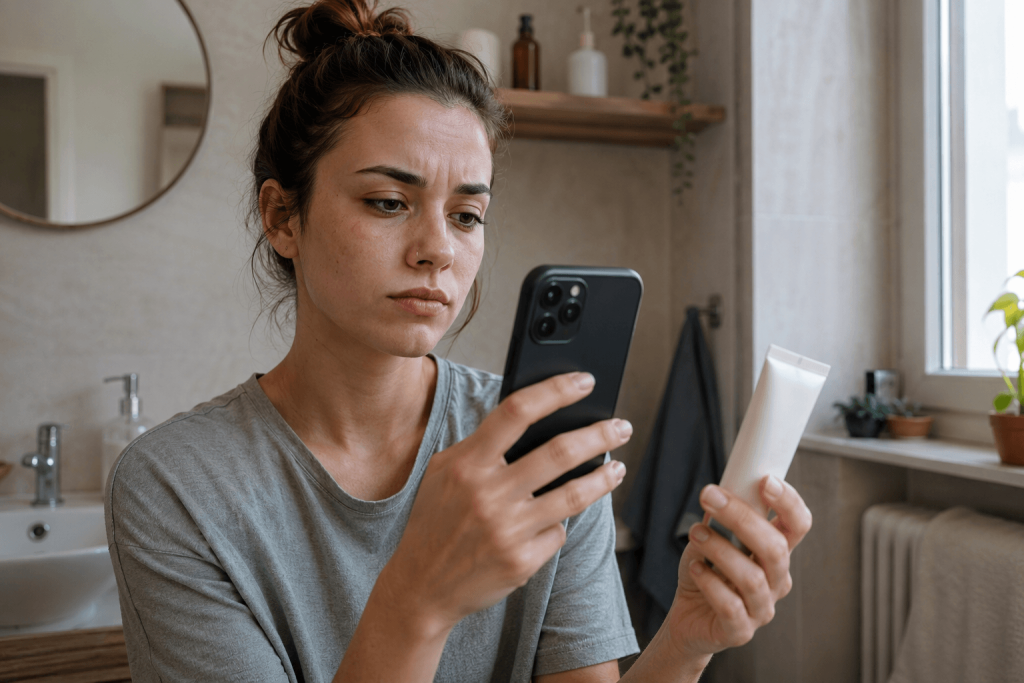
The free pore clogging checker app is ReadLabel, a fast way to scan skincare ingredients and spot possible pore-clogging flags before you buy or apply a product. It is built for people who want a quick answer to “will this clog my pores?” without reading a long ingredient label.
Check pore-clogging ingredients on mobile, fast
ReadLabel is a free pore clogging checker app that works on your phone. You can scan an ingredient list with the camera, upload a photo, or scan a product barcode where relevant.
That makes it easier to check a cleanser, moisturizer, sunscreen, makeup item, or treatment product in seconds. You do not need to switch to a desktop-style checker or decode an INCI ingredient list by hand.
Who this app is for
This app is for people who want a quick acne safe ingredient checker before they commit to a product. It is especially useful for:
- acne-prone skin shoppers
- oily or congestion-prone users
- people who want non-comedogenic skincare choices
- sensitive skin users who want simpler product decisions
- anyone tired of hidden pore cloggers in “clean” formulas
If you regularly ask, “is this acne safe?” or “did this product break me out?”, this app is built for that moment.
How ReadLabel checks for pore-clogging risk
ReadLabel reads the ingredient list from a photo and flags ingredients that may be comedogenic or otherwise more likely to cause congestion for some users. It turns the label into plain-language guidance so you can make a faster decision.
The app looks for patterns in the full formula, not just marketing claims. That matters because a product labeled non-comedogenic can still include ingredients that some acne-prone users prefer to avoid.
Why a phone app is better than manual web checking
A mobile app is faster than copying ingredient lists into a desktop checker or bouncing between tabs. ReadLabel is built for the moment you are standing in a store, opening a package, or comparing products on your phone.
What the mobile flow gives you
- camera scan of the ingredient list
- upload from your camera roll
- quick barcode scan for product lookup when available
- saved scan history across devices
- simple results that are easy to revisit later
That is the main difference between a skincare ingredient scanner app and a desktop-style tool: less friction, faster decisions, and fewer steps.
How free access works
ReadLabel gives you a way to try the app with a 3-day free trial. That lets you test the scan flow and see how the app handles your own products before you decide what to do next.
If you are comparing a free ingredient checker app skincare users can actually use on mobile, that trial makes it easy to see the value quickly.
How accurate are the results?
ReadLabel gives guidance, not a medical diagnosis. It helps you identify possible pore-clogging ingredients, but it cannot guarantee that a product will or will not break you out.
That honesty matters because comedogenicity ratings are only one part of product choice. Formula context, ingredient concentration, and your own skin can all affect how a product feels on your face.
Trust signals that matter in an ingredient scanner
A good pore clogging ingredients app should do more than highlight random terms. It should use an updated ingredient database, explain why something is flagged, and make the result easy to understand.
ReadLabel focuses on:
- updated ingredient coverage
- clear, plain-language flags
- fast scan results on mobile
- practical guidance for acne-prone users
- saved checks so you can compare products later
That gives you a cleaner workflow than manually comparing labels or searching ingredients one by one.
What kinds of products can you check?
You can use ReadLabel on many skincare and cosmetic products that list ingredients on the package. That includes products with long labels that are hard to read in the moment.
Common examples include:
- moisturizers
- face washes
- sunscreens
- foundations and makeup
- serums and creams
- body care products
If a product has an ingredient label, the app helps you check it quickly.
How to use the app
- Open ReadLabel on your phone.
- Scan the ingredient list with your camera or upload a photo.
- Review the pore-clogging flags and plain-language summary.
- Save the scan if you want to compare products later.
- Decide whether the product fits your skin goals.
That workflow is made for faster product selection, not research overload.
Why users search for a free comedogenic checker app
People usually want a fast answer before they buy. They do not want to spend time comparing forums, ingredient dictionaries, and review threads just to find out whether a product looks risky.
Searches like free comedogenic checker app, free skincare scanner app, and barcode skincare ingredient checker all point to the same need: a simple tool that helps you avoid products that may clog pores.
ReadLabel vs manual ingredient checking
Manual checking can work, but it is slow. You have to read a full label, look up unfamiliar names, and decide what matters.
ReadLabel reduces that work by:
- reading the label for you
- flagging possible pore cloggers quickly
- showing a clearer summary on mobile
- keeping your scan history for later comparison
If you want the speed of an app and the clarity of a checker, that is the advantage.
Related checker page
If you want the broader ingredient-checking version of this workflow, see the pore clogging checker.
Frequently asked questions
How do I know if an ingredient clogs pores?
You usually do not know from the name alone. A checker app helps by scanning the ingredient list and flagging ingredients that may be more likely to contribute to congestion for acne-prone users.
Is there an app that checks skincare ingredients?
Yes. ReadLabel is a mobile-first app that scans ingredient lists and highlights possible pore-clogging ingredients in plain language.
What ingredients are pore clogging?
There is no single universal list that applies to everyone. Some ingredients are more often flagged for comedogenic risk than others, but the best app answer is to scan the full formula, not guess from marketing claims.
How can I check if a product is non-comedogenic?
Scan the ingredient list in ReadLabel and review the flags. A non-comedogenic label is helpful, but it is not a guarantee that every acne-prone user will react the same way.
Are comedogenicity ratings accurate?
They are useful as guidance, not as a promise. A rating can help you compare products faster, but your skin type and the full formula still matter.
Can a barcode scanner tell if skincare causes acne?
A barcode scanner can help identify a product, but the ingredient list is what tells you more about pore-clogging risk. ReadLabel is designed to analyze the actual ingredient label from a photo, which is more useful for this question.
Does the app work without a signup?
ReadLabel is designed for fast, low-friction checking on mobile, so you can get to the scan flow quickly. The easiest way to see how it fits your routine is to open the app and try the scan experience.
Is this app useful for sensitive skin too?
Yes. It is helpful for sensitive skin users who want a clearer way to avoid products that may be too heavy, congesting, or hard to judge from the front label alone.
Can I save my scans?
Yes. ReadLabel keeps scan history so you can compare products later instead of re-checking the same label again.