
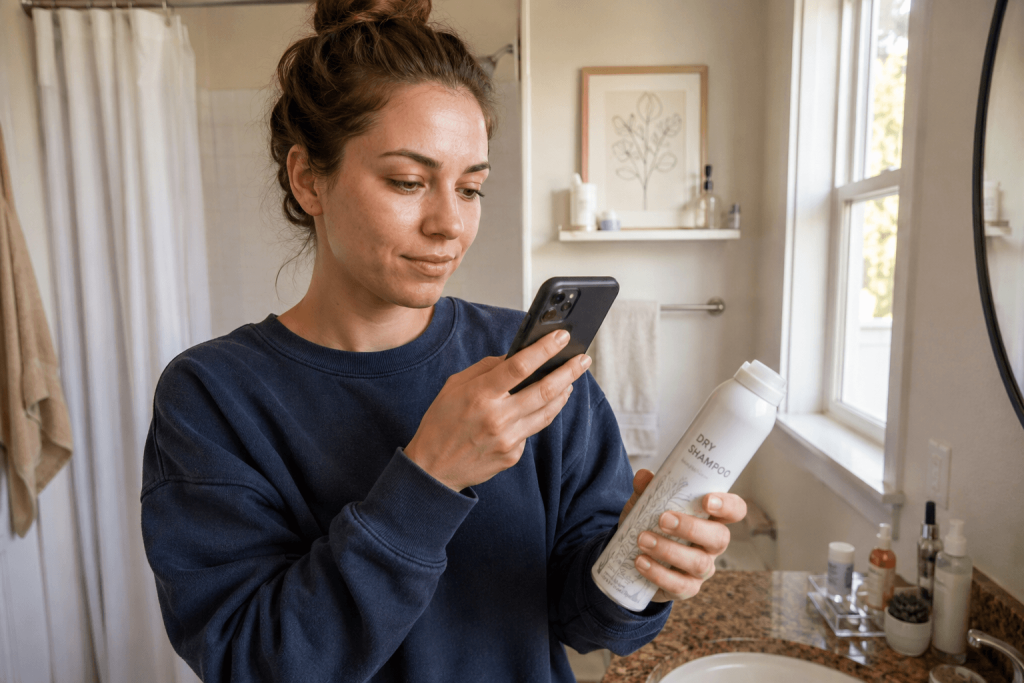
Dry shampoo comedogenic checker helps you quickly see whether a dry shampoo may be more likely to clog pores before you spray it near your hairline, forehead, or scalp. ReadLabel scans the ingredient list from a photo and gives you a plain-language pore risk summary, not a medical diagnosis.
Check a dry shampoo for pore-clogging risk fast
Use ReadLabel when you want a quick answer to “will this clog my pores?” for a specific dry shampoo. The app reads the ingredient list from a photo, then flags formula parts that may matter for acne-prone or breakout-prone skin.
This is useful in-store and at home. You can check a can before buying, verify a bottle you already own, or scan a label after a breakout and compare the formula with your other products.
How to use the checker on a dry shampoo label
The fastest workflow is simple:
- Take a photo of the ingredient list.
- Upload an existing photo if you already saved the label.
- Scan the ingredient list with your camera.
- Scan the barcode when you want to look up a product faster.
That makes it easier to check a dry shampoo ingredient scan on the spot, instead of guessing from the front label or marketing claims.
Why dry shampoo can trigger forehead or scalp breakouts
Dry shampoo can leave residue where acne often shows up first. Even if you do not apply it directly to your face, overspray and transfer can reach the forehead, hairline, neck, and scalp.
That matters because the formula often includes ingredients that can sit on skin, build up with reapplication, or mix with sweat and oil. If you are trying to find a non comedogenic dry shampoo, checking the full ingredient list is the safest first step.
Ingredient patterns that matter in dry shampoo formulas
When ReadLabel reviews a dry shampoo, it can flag common formula groups that acne-prone users often want to check closely:
- Absorbent powders and starches
- Oils and heavy emollients
- Fragrance/parfum
- Silicones
- Film-formers
- Aerosol propellants like isobutane, propane, and butane
These ingredients do not mean a product is automatically bad. They do mean the formula deserves a closer look if you are shopping for an acne-safe dry shampoo or trying to reduce the chance of pore-clogging dry shampoo residue.
Better than generic skincare analyzers for hair products
Generic skincare tools are often built for face creams and serums. A hair product comedogenic checker should be more useful for dry shampoo because it needs to handle aerosol formulas, powder residue, and real-world use near the scalp.
ReadLabel is built for that use case. It gives you a fast, mobile-first check that helps you decide before you buy or spray.
Read dry shampoo results the right way
A result from the checker means potential comedogenic risk, not a guarantee that a product will cause acne. Formula context matters, and two products with similar ingredients can behave differently on skin.
Use the result as decision support:
- If the formula looks low risk, you may feel more confident buying it.
- If it gets flagged, you can compare another option before using it.
- If you already broke out, you can recheck the exact can you used.
For a broader scan beyond dry shampoo, you can also use the pore clogging checker page.
Dry shampoo and fungal acne are not the same check
A fungal acne safe dry shampoo check is not identical to a comedogenic check. Some users care about both, but they answer different questions.
If your main concern is clogged pores, focus on comedogenicity and residue risk. If you also react to formulas that trigger fungal-acne-style concerns, you may want to review that separately after checking the dry shampoo label.
Good use cases for acne-prone shoppers
ReadLabel is especially helpful if you are checking:
- Batiste or other drugstore dry shampoo formulas
- Klorane or salon-style products
- Luxury aerosols with longer ingredient lists
- Travel-size cans you want to verify quickly
- A product you suspect caused forehead acne or scalp acne
If you are standing in a store and wondering whether a product is acne safe, a label scan is faster than searching reviews or forum posts.
How to reduce residue transfer after using dry shampoo
A good scan is only part of the decision. You can also lower risk by using less product, spraying farther from the scalp, and avoiding repeated buildup between washes.
If you are breakout-prone, patch test new products and watch the areas where residue lands first. That is often more useful than judging the front label alone.
Can you compare rinse-out and leave-on hair products the same way?
No. A leave-on product like dry shampoo deserves a closer pore-clogging check than a rinse-out product because it stays on the scalp and hairline longer.
That does not make every leave-on formula comedogenic. It does mean the formula context matters more when you are choosing a product for acne-prone skin.
FAQ
Can dry shampoo clog pores?
Yes, dry shampoo can clog pores for some people, especially when residue lands on the hairline, forehead, neck, or scalp. That is why checking the ingredient list before use is useful.
Can dry shampoo cause acne on the forehead or scalp?
Yes. Overspray, buildup, and residue transfer can contribute to forehead acne or scalp acne in acne-prone users.
What ingredients in dry shampoo are comedogenic?
There is no single ingredient that makes every formula comedogenic. The better approach is to scan the full INCI ingredient list and look for formula patterns that may raise pore-clogging risk.
How do I know if a hair product is non-comedogenic?
Scan the actual ingredient list and review the formula as a whole. A front-label claim is not enough, especially for hair products used near the skin.
Is dry shampoo bad for acne-prone skin?
It can be if the formula leaves residue or if you use it often near breakout-prone areas. An acne-safe dry shampoo check helps you make a better choice.
Which dry shampoos are safe for acne-prone skin?
The safest option is the one whose full ingredient list scans with the lowest pore-clogging risk for your skin. The answer depends on the exact product, not the category name alone.