
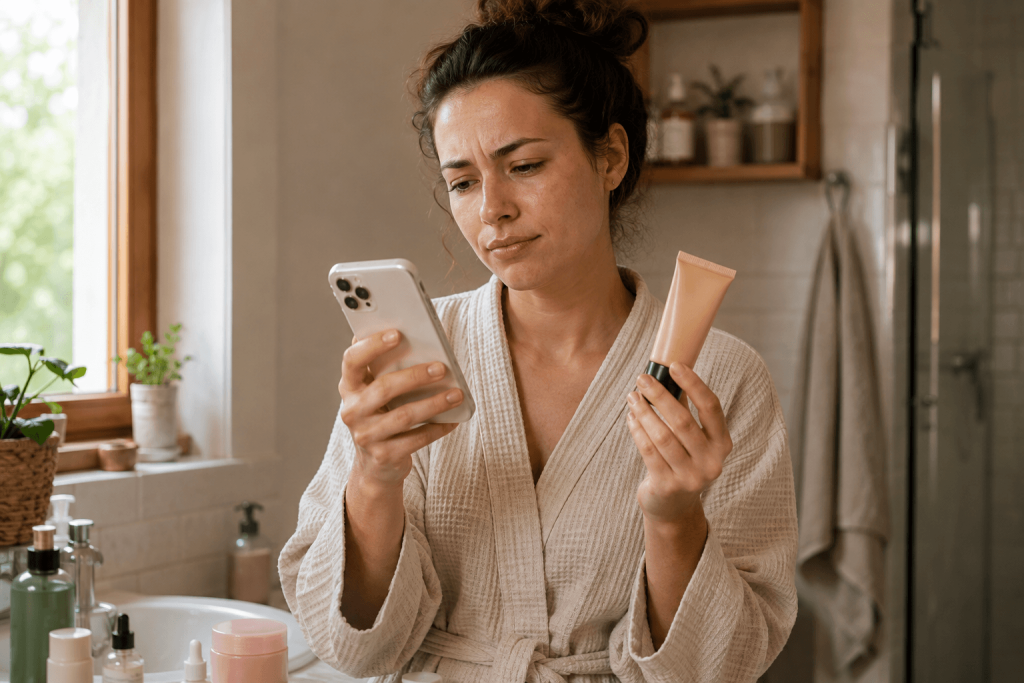
bb cream cc cream comedogenic checker is the fastest way to see whether a formula may be risky for acne-prone skin. Use ReadLabel to scan the ingredient list from a photo, and get a plain-language result before you buy or apply.
Check BB and CC cream ingredients before they clog pores
BB cream and CC cream often look skin-friendly on the front of the package. The ingredient list is what tells you whether the formula may still contain comedogenic ingredients.
With ReadLabel, you can:
- take a photo of the ingredient list
- upload an existing ingredient-list photo
- scan the list with your camera
- check the product while you are shopping
If you want a faster path than copying ingredients into a generic database, use our pore clogging checker.
What comedogenic means in plain language
Comedogenic means an ingredient may contribute to clogged pores for some people. It does not mean every acne-prone user will react the same way.
That is why ReadLabel gives you a practical result, not just raw ingredient data. The app helps you judge whether a BB cream or CC cream looks acne safe for your skin and your routine.
Why non-comedogenic makeup still deserves a scan
A product labeled non-comedogenic can still be worth checking. Marketing claims do not always reflect the full formula, the ingredient amounts, or how your skin responds.
This matters most if you are trying to avoid:
- hidden pore cloggers
- products that break you out
- formulas that feel safe but cause congestion later
- makeup that is not truly sensitive skin friendly
How ReadLabel helps you judge BB cream vs CC cream
For acne-prone shoppers, the real question is not which one looks better on paper. It is which one is less likely to clog pores once you actually wear it.
BB cream and CC cream can both be fine choices, but the formula matters more than the label. ReadLabel helps you scan the product and make a quicker choice when you are comparing a comedogenic BB cream checker result against a comedogenic CC cream checker result.
Common pore-clogging ingredients shoppers want flagged
When people search for a BB cream ingredient checker or CC cream ingredient checker, they usually want to know whether the formula contains ingredients that may be more likely to cause breakouts.
ReadLabel is built to flag the kinds of ingredients acne-prone users often worry about, including formulas that may be:
- heavy or overly occlusive
- more likely to feel greasy on clog-prone skin
- risky for users with acne cosmetica concerns
How to read your result
Use the result as a decision aid, not a guess.
- Lower concern means the formula looks more compatible with acne-prone use.
- Flagged ingredients mean you should review the full formula before buying.
- Higher concern means the product may be a poor fit if you clog easily.
Ingredient scores are directional. They depend on concentration, formula balance, and individual skin response. That is why ReadLabel focuses on practical interpretation, not just a yes-or-no label.
A better mobile-first scan for shopping decisions
Many ingredient analyzers feel cluttered when you are standing in a store or checking a product on your phone. ReadLabel is built for fast, mobile-first scans so you can decide quickly.
You get a simpler path than tools like CosDNA, Skincarisma, or INCIdecoder when your goal is straightforward shopping support. Scan the list, check the risk, and move on.
Other complexion products you may want to check
This page is useful for more than just BB cream and CC cream. If you also shop for complexion products like:
- tinted moisturizer
- foundation
- other makeup labeled non-comedogenic
ReadLabel can help you check those ingredient lists too.
Use ReadLabel now before you buy
If you are asking, “will this clog my pores?” the fastest next step is to scan the ingredient list with ReadLabel. That gives you a quick, acne-prone-friendly way to judge BB cream and CC cream before they end up on your face.
FAQ
Is BB cream comedogenic?
BB cream can be comedogenic or low-risk depending on the formula. The safest way to check is to scan the ingredient list with ReadLabel before you buy or use it.
Is CC cream good for acne-prone skin?
CC cream can work well for acne-prone skin if the formula is light and low in pore-clogging ingredients. ReadLabel helps you check the actual ingredient list instead of trusting the marketing label.
How do I check if makeup is comedogenic?
Take a photo of the ingredient list with ReadLabel and let the app scan it for potential pore-clogging ingredients. That is faster than manually comparing ingredients across multiple websites.
What ingredients in BB cream can clog pores?
Shoppers usually look for ingredients that may be heavier, more occlusive, or more likely to congest acne-prone skin. ReadLabel flags those kinds of concerns so you can review the formula quickly.
Is non-comedogenic makeup really non-comedogenic?
Not always. The claim can still deserve a quick ingredient review because formulas, concentrations, and skin response vary.
Which is better for acne-prone skin, BB cream or CC cream?
Neither one is automatically better. The better choice is the one with the lower pore-clogging risk in its ingredient list, and ReadLabel helps you check that fast.