
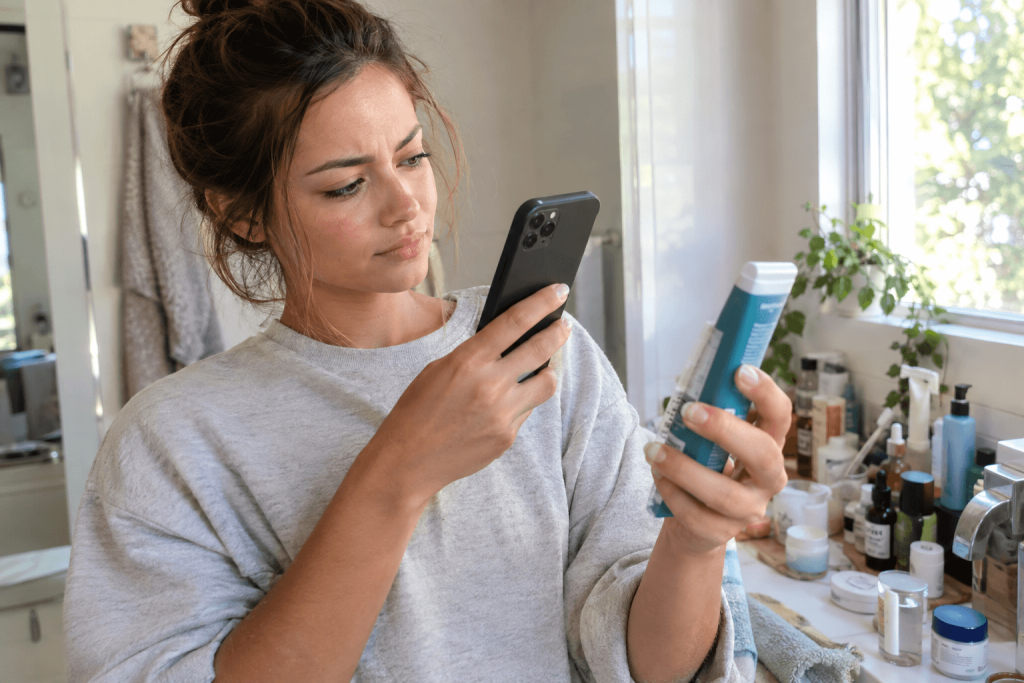
ReadLabel is a barcode scanner app for skincare acne checks when you want a fast answer to “will this clog my pores?” It helps you screen products quickly, then shows whether the formula may be risky for acne-prone skin.
Scan skincare products and get an acne-focused result
This is a skincare barcode scanner app built for shopping decisions. You scan the product, and ReadLabel helps you decide if it looks acne safe, non-comedogenic, or worth avoiding.
It is designed for people who want a quick acne-safe product checker app experience without reading every INCI ingredient list by hand.
What happens after you scan a barcode
After a scan, ReadLabel helps you understand the product in plain language. You get a fast screen for pore-clogging ingredients, plus clear flags that make the result easier to act on.
Typical scan results can help you:
- spot likely hidden pore cloggers
- see whether the product looks better or worse for acne-prone skin
- decide if it is worth buying, skipping, or checking more closely
- move from a barcode result to a deeper skincare ingredient checker view when needed
If you want the broader ingredient-screening version of this workflow, try the pore clogging checker.
Why this is better than a generic beauty scanner for acne
Most barcode apps focus on general product safety scores. ReadLabel is different because it is built around acne-specific analysis, not broad clean beauty marketing.
That matters if your main concern is whether a product may trigger breakouts. A generic score can miss the exact question shoppers ask: “is this acne safe?”
Fast in-store product screening
This page is for the moment you are standing in a store and need an answer now. Scan the barcode, check the result, and decide before you add the product to your cart.
That mobile-first workflow is useful when you want:
- a quick barcode-based skincare checker
- a simple scan before you buy skincare flow
- a faster way to compare products for comedogenic ingredients
- a tool that fits real shopping, not long research sessions
Barcode lookup plus a manual fallback
Barcode matching is useful, but it is not perfect. Some products may not be in a barcode database, or the match may not be complete.
ReadLabel is built to handle that reality with a fallback workflow. You can still check the product by scanning the ingredient list photo instead of relying only on the barcode.
That means you can use one app in two ways:
- scan the barcode when it is available
- scan the ingredient list when the barcode lookup is missing
- get a clearer acne product scanner app result either way
What ReadLabel looks for in acne-safe checks
ReadLabel focuses on ingredients and formula signals that matter for breakout-prone users. It is built to help you notice pore-clogging ingredients, not to give a vague wellness score.
This is especially helpful if you are comparing products that all sound “gentle,” “clean,” or “sensitive skin friendly” on the label.
Trust signals that matter when you are choosing an app
A good ingredient scanner app for acne should do more than say a product is “good” or “bad.” It should explain the logic clearly enough that you can trust the result in real shopping situations.
ReadLabel is built around:
- ingredient-list analysis from product photos
- plain-language acne-related flags
- a database-backed workflow for fast screening
- a result that is focused on pore-clogging risk, not generic cosmetic chatter
Free trial and low-friction sign-up
ReadLabel offers a 3-day free trial, so you can test the scan workflow before committing.
It is designed to stay lightweight and easy to use, which matters when you just want to check a product and move on.
ReadLabel vs. barcode apps that are not acne-first
Apps like Yuka, OnSkin, INCI Beauty, EWG Skin Deep, and Think Dirty are useful for broader cosmetic checking. But if your top concern is acne, the difference is focus.
| Tool type | What it does best | Acne-specific fit |
|---|---|---|
| Yuka | Broad consumer product scanning | Helpful, but not acne-first |
| OnSkin | Skin and cosmetic analysis | Closer, but still broader than acne-only screening |
| INCI Beauty | Cosmetic ingredient decoding | Strong transparency, less acne-specific |
| EWG Skin Deep | Ingredient and product safety lookup | Useful database, not built around scan-and-buy decisions |
| Think Dirty | Clean beauty scanning | Broader than acne suitability |
| ReadLabel | Acne-focused ingredient screening from product photos | Built for “will this clog my pores?” decisions |
Who this app is for
This barcode scanner app skincare acne page is for shoppers who want a fast answer before buying or using a product. It is especially useful if you:
- break out easily
- want an acne safe skincare scanner
- keep running into products with hidden pore-clogging ingredients
- prefer checking products on your phone while shopping
- want a clearer result than a generic beauty score
FAQs
Can you scan a barcode to check skincare ingredients?
Yes. A barcode scanner app for skincare can help you identify a product and then check its formula more quickly. With ReadLabel, you can also scan the ingredient list photo if the barcode path is not enough.
What app tells you if skincare products are acne safe?
An acne safe skincare app should screen products for pore-clogging risk and show the result in plain language. ReadLabel is built for that exact use case.
Is there an app that scans skincare ingredients?
Yes. ReadLabel scans ingredient list photos and can also handle barcode-based product checks when relevant. That gives you a fast way to review a product before you buy it.
What if the barcode lookup does not work?
If a barcode is missing or incomplete, you can use ReadLabel’s ingredient-list scan instead. That fallback keeps the workflow useful even when the product database match is not available.
Is this better than a general cosmetic scanner for acne-prone skin?
Yes, if your main concern is acne. General scanners often focus on broad safety or clean beauty scores, while ReadLabel is built to help you judge acne-prone skin compatibility more directly.
Can I use it in the store?
Yes. The workflow is designed for mobile-first scan use, so you can check a product quickly while shopping and make a decision on the spot.