

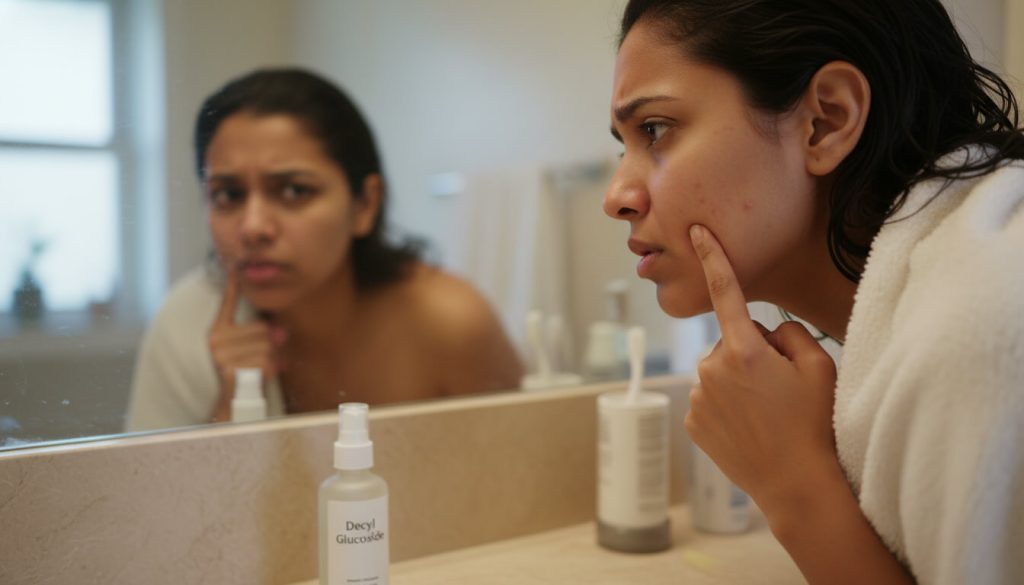
Decyl glucoside is a common cleansing ingredient found in many “gentle,” “natural,” and sensitive-skin formulas.
Because acne-prone readers often worry that any skincare ingredient could trigger breakouts, it makes sense to ask whether it can clog pores.
In this guide, we’ll break down its comedogenic status, what it means for acne-prone skin, and how to check whether the rest of your products are truly skin-friendly.
Is Decyl Glucoside Comedogenic?
Short answer: decyl glucoside is generally not considered pore-clogging.
It is a non-ionic surfactant, which means it helps wash oil away instead of settling into pores like a heavy oil might.
💡 Simple takeaway: decyl glucoside is usually low risk for pore occlusion and is not known as a classic breakout trigger.
Comedogenicity means how likely an ingredient is to block the pore opening, or follicular infundibulum.
That blockage can trap sebum inside the pore and help form microcomedones, which are early acne lesions.
Decyl glucoside does not behave like waxes, butters, or thick oils.
So, its pore-clogging profile is very different from ingredients that sit on the skin.
Why Surfactants Behave Differently From Oils
Surfactants are cleansing agents.
They grab oil, dirt, and leftover makeup so water can rinse them away.
That is why decyl glucoside is often used in cleanser, body wash, and shampoo formulas.
It works by lifting residue, not by coating the skin.
Surfactant: helps remove oil and grime.
Heavy emollient: sits on skin and may raise comedogenic concerns.
That difference matters for acne-prone skin.
A cleansing ingredient that rinses off usually has less chance to create pore blockage.
When a Mild Ingredient Can Still Cause Trouble
Even a mild ingredient can be part of a harsh formula.
If the cleanser is too stripping, your skin barrier may get irritated.
That irritation can look like breakouts, redness, or extra oil.
So the problem may be sensitivity, not true comedogenicity.
🚫 A product can be non-comedogenic and still feel too harsh for your skin.
Think about the whole product, not just one ingredient.
That is the safest way to judge pore-clogging risk.
Is Decyl Glucoside Safe for Acne-Prone Skin?
For many people with acne-vulgaris-prone skin, yes.
Decyl glucoside usually fits well in a mild cleanser routine.
Acne-prone skin often does best with gentle, non-comedogenic formulas.
Because decyl glucoside is most often used in rinse-off products, it is less likely to support microcomedone formation.
Why this matters: acne starts when sebum, dead skin, and clogged pores team up.
A good cleanser should remove buildup without upsetting the skin barrier.
Dermatologists often focus on the full formula, not one isolated ingredient.
That is because acne can flare from irritation, over-cleansing, or barrier damage.
Oily and Combination Skin
Oily skin usually handles gentle surfactants well.
That includes decyl glucoside in a balanced cleanser.
Combination skin may also benefit from it.
It can clean the T-zone without leaving the cheeks overly dry.
| Skin type | Likely fit | What to watch |
|---|---|---|
| Oily skin | Often a good match | Check for over-stripping |
| Combination skin | Usually well tolerated | Look at the full formula |
| Acne-prone skin | Generally acne-safe | Watch fragrance and harsh additives |
For many users, the goal is simple.
Clean well, but do not strip the skin dry.
Sensitive or Easily Irritated Skin
Sensitive skin can react even to mild surfactants.
That does not mean decyl glucoside clogs pores.
It may just mean the formula is too foamy, too fragranced, or used too often.
Those issues can trigger stinging and redness.
⚠️ If your face feels tight after washing, your cleanser may be too strong.
Skin type matters as much as ingredient choice.
A product that helps oily skin may still bother sensitive skin.
What Is the Comedogenic Rating of Decyl Glucoside?
Decyl glucoside does not have a widely trusted formal rating.
In practice, it is usually treated as low risk or non-comedogenic.
The comedogenic scale usually runs from 0 to 5.
Higher numbers suggest a greater chance of pore blockage.
That said, the number alone does not tell the full story.
Formulation, concentration, and product type matter a lot.
How the Comedogenic Scale Works
- 0: unlikely to clog pores
- 1: very low risk
- 2–3: possible risk for some skin types
- 4–5: more likely to clog pores
Decyl glucoside is generally discussed in the lowest-risk zone.
That is why it often appears in acne-safe and sensitive-skin products.
Older ratings sometimes came from the rabbit ear model.
That test does not always match how human skin behaves.
Why Rating Data Can Be Inconsistent
An ingredient can behave differently depending on the formula.
A cleanser is not the same as a leave-on lotion.
Concentration also matters.
A tiny amount may be fine, while a harsh blend can feel drying.
Remember: the comedogenic scale is useful, but it is not perfect.
It should guide you, not decide everything for you.
That is why experienced shoppers read the whole ingredient list.
They do not stop at one safe-sounding label claim.
How to Check If Skincare Ingredients Clog Pores
Ingredient lists can be hard to read.
Long names, hidden triggers, and marketing buzzwords make it messy fast.
That is where a tool like ReadLabel helps.
It scans the actual ingredient list and flags pore-clogging ingredients in plain language.
✅ If you want a faster check, scan the label before you buy.
ReadLabel can help you spot hidden pore-cloggers in seconds.
This is useful for cleanser, moisturizer, body wash, and shampoo products.
It is also helpful when a product sounds clean but still hides risky ingredients.
Why Label Reading Gets Complicated Fast
One product can include surfactants, preservatives, fragrance, and botanical extracts.
That mix makes it hard to judge acne safety at a glance.
Marketing words like “natural” or “clean” can also distract you.
They do not guarantee a non-comedogenic formula.
💡 A short ingredient list is not always better.
It still needs to be acne-friendly for your skin type.
If you get overwhelmed, scan first and research later.
That saves time and lowers the chance of a bad purchase.
How ReadLabel Helps You Decide Faster
ReadLabel is built for acne-prone users who want fast answers.
It reads the printed label, not just a barcode database.
That matters because many products are missing from standard databases.
An ingredient scan gives you the real formula in front of you.
- camera scan of ingredient lists
- photo upload for ingredient analysis
- plain-language explanations
- pore-clogging ingredient detection
- history for products you checked before
So, if you are staring at a shelf and wondering, “Will this clog my pores?” you can answer faster.
That is the point: fewer guesses, fewer breakouts, better shopping.
What Decyl Glucoside Is and Where You’ll Find It
Decyl glucoside is a glucose-based surfactant made from plant-derived raw materials.
It is used for cleansing and foam, not moisturizing.
Because it is mild, brands love it in “gentle” formulas.
It often shows up where sensitive skin needs a softer cleanse.
It is also a non-comedogenic favorite in products for acne-prone skin.
That is because it helps wash away oil without feeling too harsh.
Common Product Types Containing Decyl Glucoside
You will often find it in facial cleanser formulas.
It also appears in body wash and shampoo.
Baby products and makeup removers may use it too.
Brands like its gentle feel and easy foam.
Common use cases: cleanser, shampoo, body wash, baby wash, and makeup remover.
That wide use is a good clue.
It is mainly there to clean, not to clog pores.
Why Brands Use It in Gentle Formulas
Many brands want a cleanser that feels soft but still works well.
Decyl glucoside helps them do that.
It can support a creamy lather without the feel of a harsh wash.
That makes it popular in sensitive-skin products.
Still, “gentle” is not a magic word.
Always check the full formula for fragrance and other irritants.
Decyl Glucoside vs. Other Common Surfactants
Decyl glucoside is usually milder than stronger cleansing agents.
That is one reason acne-prone users often prefer it.
But “gentler” does not mean “best for everyone.”
Your skin barrier and skin type still matter most.
Decyl Glucoside vs. SLS and SLES
SLS and SLES clean very well, but they can feel more stripping.
Some acne-prone people notice more irritation with them.
Decyl glucoside is often chosen instead because it is softer on skin.
That can be helpful when your face already feels reactive.
Decyl glucoside: milder, often better for sensitive skin.
SLS/SLES: stronger cleaners, higher irritation potential for some users.
If a cleanser leaves you squeaky clean, that is not always a good sign.
Sometimes it means your barrier is getting stripped.
Decyl Glucoside vs. Cocamidopropyl Betaine
Cocamidopropyl betaine is often paired with decyl glucoside.
Together, they help build foam and balance cleansing power.
Some people tolerate one better than the other.
So your own skin response matters more than the name alone.
If a cleanser bothers you, do not assume decyl glucoside is always the cause.
Check the whole formula and the product type.
Can Decyl Glucoside Dry or Irritate Skin?
Yes, it can in some formulas.
That risk is about irritation, not pore clogging.
Dryness can happen when the cleanser is too strong, too frequent, or too foamy.
Fragrance and pH can also play a role.
When the skin barrier gets stressed, the face may sting or feel tight.
Some people then notice more shine and more breakouts.
Signs the Formula Is Too Stripping
- tightness after washing
- stinging or burning
- flaking or rough patches
- redness after cleansing
- rebound oiliness later in the day
Those are signs your cleanser may be too aggressive.
A gentler formula may work better for your skin barrier.
How to Reduce Irritation Risk
Start with a patch test if your skin reacts easily.
Use the product once daily at first.
Choose simpler formulas when possible.
Less fragrance and fewer extras often mean fewer surprises.
⚠️ If your skin burns, stop using the product and switch formulas.
Good cleansing should leave skin clean, not stressed.
That is the sweet spot.
Does Formulation Change Whether Decyl Glucoside Is Acne-Safe?
Yes, absolutely.
The full formulation matters more than one ingredient.
A cleanser can be acne-friendly in one formula and irritating in another.
That depends on fragrance, heavy emollients, and total surfactant load.
This is where ingredient awareness really pays off.
It helps you judge the whole product, not just the headline ingredient.
Rinse-Off vs. Leave-On Products
Decyl glucoside is most common in rinse-off products.
That lowers the chance of pore blockage.
Leave-on formulas are different.
Anything left on the skin deserves extra scrutiny.
| Product type | Typical risk | Why |
|---|---|---|
| Cleanser | Low | Rinsed away quickly |
| Body wash | Low | Short skin contact time |
| Leave-on product | Depends on formula | Stays on skin longer |
So, if you see decyl glucoside in a wash product, that is usually reassuring.
In a leave-on product, the rest of the formula matters even more.
Ingredient Pairings That Matter
Some formulas pair decyl glucoside with fragrance or essential oils.
Those can raise irritation risk for sensitive skin.
Other products add heavy oils or thick occlusives.
Those are more likely to affect pore feel than decyl glucoside itself.
Look twice if you see: fragrance, denatured alcohol, or heavy oils near the top of the list.
This is where a quick ingredient scan helps most.
It saves you from guessing based on one friendly-sounding ingredient.
What to Look for in an Acne-Friendly Cleanser
An acne-friendly cleanser should clean without overdoing it.
That means gentle surfactants, balanced pH, and minimal irritants.
Decyl glucoside can fit that role nicely.
But it should be part of a balanced formula.
Over-cleansing can backfire fast.
More foam does not always mean better skin.
Good Signs on the Label
- non-comedogenic
- fragrance-free
- gentle cleansing agents
- balanced formula
- simple ingredient list
These signs do not guarantee perfection.
Still, they are good clues for acne-prone skin.
Red Flags for Acne-Prone Skin
Watch for heavy fragrance if your skin is sensitive.
It often creates more problems than people expect.
Also watch for harsh surfactant blends and lots of drying alcohols.
Those can leave skin tight and reactive.
🚫 A cleanser should remove excess sebum, not punish your skin barrier.
If you are unsure, compare formulas before buying.
A small decision now can prevent a breakout later.
Final Thoughts on Decyl Glucoside and Clogged Pores
Does Decyl Glucoside Clog Pores? For most people, no.
It is generally considered non-comedogenic and low risk.
The bigger concern is usually irritation, not true pore clogging.
That is especially important for sensitive or over-cleansed skin.
So, check the whole formula before you judge the product.
If you want a fast way to do that, scan the ingredient list before you buy.
That simple habit can save your skin and your money.
It is one of the easiest acne-safe shopping wins.
Frequently Asked Questions
Does decyl glucoside clog pores?
Decyl glucoside is generally considered non-comedogenic and does not clog pores for most people. It is usually valued for being a mild cleanser, not for causing breakouts.
What is the comedogenic rating of decyl glucoside?
A formal comedogenic rating is not widely established, but decyl glucoside is generally treated as low risk or non-comedogenic. Its main concern is more often irritation than pore blockage.
Is decyl glucoside good for acne-prone skin?
Yes, it is usually a good fit for acne-prone skin because it is a mild surfactant and is most often used in rinse-off cleansers. The full formula still matters, especially if the product contains fragrance or harsh additives.
Can decyl glucoside irritate sensitive skin?
Yes, some sensitive skin types may react to it, especially in formulas that are too foamy, too acidic, or heavily fragranced. If your skin stings or feels tight after cleansing, the product may be too harsh for you.
Is decyl glucoside better than SLS for acne-prone skin?
For most acne-prone users, yes, because decyl glucoside is generally milder and less stripping than SLS. That said, the best cleanser depends on your skin barrier, sensitivity, and the rest of the formula.
Is decyl glucoside safe in a leave-on product?
It is less common in leave-on products, but safety depends on the full formulation. If it appears in a leave-on product, check whether the rest of the ingredients are lightweight and non-irritating.
How do I know if a product is clogging my pores?
Look for patterns like new closed comedones, blackheads, or breakouts after starting a product. Tools like ReadLabel can help you scan ingredient lists quickly so you can spot likely pore-clogging ingredients before buying.