
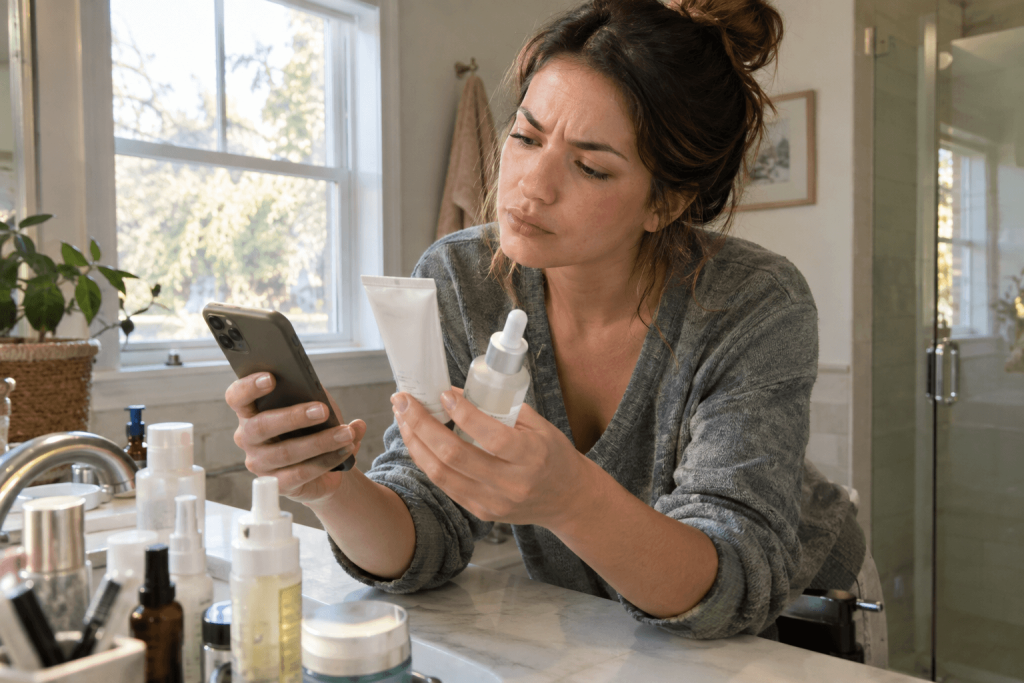
ReadLabel vs think dirty pore clogging checker is a comparison about speed, clarity, and whether the tool is actually built for acne-prone product screening. If your main question is “will this clog my pores?”, ReadLabel is the more focused choice.
ReadLabel vs. Think Dirty for pore-clogging checks
ReadLabel is built to read the actual ingredient list from a photo and flag pore-clogging ingredients in plain language. Think Dirty is better known for clean beauty and product transparency scoring, not for dedicated comedogenic analysis.
| Feature | ReadLabel | Think Dirty |
|---|---|---|
| Main purpose | Acne-prone ingredient checking | Clean-beauty and transparency scoring |
| Pore-clogging focus | Built for it | Not the core focus |
| Input method | Photo of ingredient list, camera scan, uploaded photo | Product lookup and barcode-style scanning workflow |
| Works on any product label | Yes | More dependent on database coverage |
| Decision speed | Fast for label-by-label checks | Fast for general product scores |
| Best for | Users asking “is this acne safe?” | Users comparing overall product scoring |
For shoppers who want a non-comedogenic check before buying, the difference matters. Think Dirty can help you evaluate a product, but ReadLabel is the better fit when the real goal is pore-clogging detection.
Can Think Dirty check pore-clogging ingredients?
Think Dirty is not positioned as a dedicated pore clogging checker. It focuses more on product ratings and ingredient transparency than on answering the specific acne-prone question of whether a formula is likely to clog pores.
That means users may see general risk or clean-beauty signals, but not always a clear, acne-focused answer. If you need a tool that tells you faster whether a formula looks acne safe, ReadLabel is the more direct option.
Why ReadLabel is better for acne-prone shoppers
ReadLabel is designed around the question that acne-prone shoppers actually ask: “will this clog my pores?” It scans the ingredient list from the product itself, which makes it practical for real-world shopping.
That helps when:
- the product is not in a database
- the label uses long INCI ingredient lists
- you want a quick answer in-store
- you need a faster decision before checkout
If you want the broader guide, the main pore clogging checker page covers the core workflow. This comparison page is about choosing the better app.
Side-by-side: which app gives clearer acne-safe decisions?
ReadLabel gives more direct comedogenic ingredient analysis for acne-prone users. Think Dirty gives broader shopping context, but that can be less useful when your only concern is hidden pore cloggers.
What you may see in each app
- ReadLabel: plain-language flags for ingredients that may clog pores
- Think Dirty: cleaner or dirtier product scoring, plus ingredient transparency cues
- ReadLabel: faster interpretation for “is this non-comedogenic?” decisions
- Think Dirty: more general-purpose product evaluation
If your shopping rule is “avoid hidden pore cloggers,” narrower is better. A general score is helpful, but it is not the same as a purpose-built acne checker.
How each tool handles product input on mobile
ReadLabel is built around the camera-first workflow. You scan the ingredient label with your phone, upload a photo, and get analysis without manually hunting through a product database.
Think Dirty is more aligned with barcode-based or product lookup flows. That can be convenient for known items, but it is less direct when you are standing in a store with only the ingredient panel in front of you.
Mobile workflow comparison:
- ReadLabel reads the actual ingredient list from the package.
- Think Dirty focuses more on product lookup and scanning a database entry.
- ReadLabel works well even when a product is new or obscure.
- Think Dirty is useful when you want a general product score quickly.
When Think Dirty makes more sense
Think Dirty can make sense if you want a broader ingredient-transparency app and you are not only checking for pore clogging. It is a stronger fit for shoppers who care about overall product scoring and clean-beauty style browsing.
Choose Think Dirty if you:
- want a general product score
- shop by barcode or product lookup
- care about broader ingredient transparency
- are not making decisions based mainly on acne breakouts
When ReadLabel is the better choice
ReadLabel is the better choice if your first priority is checking whether a product may clog pores. It is built for acne-prone users who want a faster yes-or-no style decision before buying.
Choose ReadLabel if you:
- keep asking “is this acne safe?”
- want to check labels from a photo
- need a quick comedogenic ingredient checker on mobile
- want clearer flags for pore-clogging risk
- want an app made for purchase decisions, not just product scores
Coverage limits to keep in mind
No scanner is perfect, and database-based apps can miss products or give less useful context. That is why ingredient-list analysis matters so much for acne-prone shoppers.
High-level differences:
- Think Dirty depends more on its product database and scoring model
- ReadLabel reads the label you actually have in front of you
- CosDNA is useful for acne risk lookup, but it is less phone-first for quick shopping decisions
- EWG Skin Deep is more about hazard ratings than pore-clogging analysis
- Yuka is broad and general, not acne-specific
Can ReadLabel replace CosDNA or other acne-focused checkers?
ReadLabel can replace CosDNA for many shoppers who want a faster, mobile-first way to screen product labels for pore-clogging risk. It is especially useful when you want to scan a photo instead of comparing ingredient data in a separate web tool.
If you want a simple answer while shopping, ReadLabel is the easier tool to use. If you want broader ingredient reference behavior across multiple databases, you may still compare tools — but for acne-prone purchase decisions, ReadLabel is built for the job.
FAQ
Does Think Dirty check pore-clogging ingredients?
Think Dirty is not primarily a pore-clogging checker. It focuses more on product transparency and general scoring than on dedicated comedogenic analysis.
What app checks if skincare ingredients clog pores?
ReadLabel is built for checking pore-clogging ingredients from a photo of the label. It is the more direct choice when your main concern is acne-prone screening.
Is Think Dirty good for acne-prone skin products?
Think Dirty can help with product transparency, but it is not the most purpose-built option for acne-prone shoppers who want clear pore-clogging flags.
What is the best comedogenic ingredient checker?
For fast mobile use, ReadLabel is the strongest fit for acne-prone users who want a pore clogging checker tied to the actual ingredient list on the product.
How do I know if a product is non-comedogenic?
Scan the ingredient list with ReadLabel and check the pore-clogging flags before you buy. That gives you a faster answer than relying on marketing claims alone.
Is CosDNA better than Think Dirty for skincare ingredients?
CosDNA is more relevant than Think Dirty if your main concern is acne and comedogenic risk. But ReadLabel is often the more convenient choice when you want to check a label quickly from your phone.