
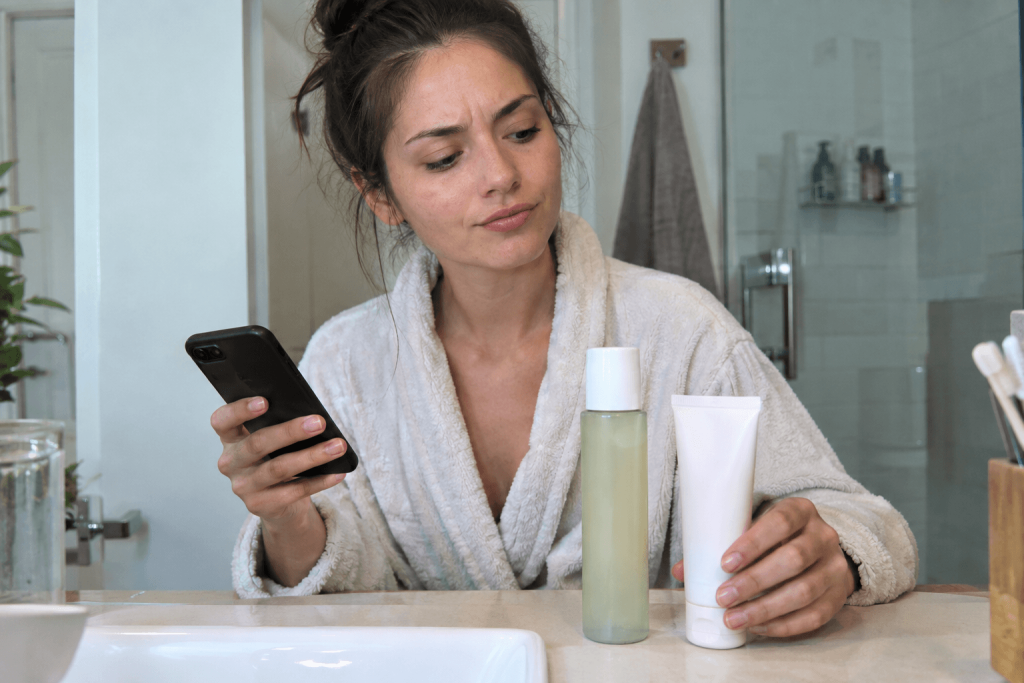
Readlabel vs yuka pore clogging checker: if your main question is “will this clog my pores?”, ReadLabel is the better fit. Yuka is broader and useful for general product scoring, but ReadLabel is built for fast, label-first ingredient checks.
ReadLabel vs Yuka: which one is built for pore-clogging checks?
ReadLabel is designed to read the actual ingredient list and flag pore-clogging risk directly. Yuka is a broader cosmetic ingredient scanner that focuses on overall product health and safety scoring, not dedicated comedogenic screening.
If you are acne-prone, that difference matters. You usually want a fast answer on the specific formula in your hand, not a general score from a database entry.
Side-by-side comparison for acne-prone shoppers
ReadLabel wins when the goal is label-first verification. Yuka is stronger as a broad consumer app, but it is not primarily a pore clogging checker.
| Dimension | ReadLabel | Yuka |
|---|---|---|
| Main job | Direct ingredient-list scanning for pore-clogging risk | Broad product-health scoring |
| Best for | Acne-prone skin and ingredient verification | General wellness-minded shoppers |
| Scan method | Camera photo, uploaded photo, label scan | Barcode-first workflow with product database lookup |
| Works without a database match | Yes, because it reads the ingredient list | Less reliable when barcode data is missing or incomplete |
| Pore-clogging focus | Explicit | Not the primary focus |
| In-store use | Fast for checking a label on the shelf | Fast only when the product is in its database |
For shoppers comparing ReadLabel vs Yuka for ingredients, the key issue is transparency. ReadLabel checks the printed INCI ingredient list, so you can verify the exact product in front of you.
Why ReadLabel is more reliable when barcode data is missing
ReadLabel does not depend on a barcode match to understand the formula. That makes it more dependable when product databases are outdated, incomplete, or missing the exact version you are holding.
This matters with skincare dupes, reformulations, and regional packaging changes. A barcode scanner can point you to the wrong version or no version at all.
ReadLabel is the better choice when you want to:
- scan a product in-store and get an immediate ingredient check
- review an online product from a photo of the label
- compare two similar formulas before buying
- confirm whether a new product looks acne-safe
If you want the dedicated tool behind this use case, use our pore clogging checker.
Who each app is best for
ReadLabel is best for users who care about breakout risk first. Yuka is best for shoppers who want a general product score across cosmetics and other categories.
Choose ReadLabel if you:
- ask “will this clog my pores?” before buying
- want quick comedogenic ingredient checker style feedback
- shop in-store and need a label-first scan
- care more about formula-level verification than broad health scoring
Choose Yuka if you:
- want a general app for product health checking
- prefer a broad consumer score over a specialized acne-focused check
- mainly use barcode lookup on products already in a database
Is Yuka enough if your main concern is clogged pores?
For most acne-prone users, Yuka is not specific enough on its own. It gives broad product context, but it is not built as a dedicated pore-clogging ingredient scanner.
That is why users often search for a Yuka alternative for acne prone skin. They want a tool that reads the exact ingredient list and tells them whether the formula looks risky for their skin.
When to use ReadLabel instead of a barcode app
Use ReadLabel when the question is tied to the exact label in your hands. That is the fastest way to check hidden pore cloggers before you buy.
It is especially useful for:
- skincare products with long INCI ingredient list panels
- cosmetics where the barcode leads to incomplete product data
- comparing dupes with similar packaging but different formulas
- checking products at home after a breakout reaction
What to expect from comedogenicity ratings
Comedogenic ingredients are a useful shortcut, but they are not a guarantee by themselves. Formula context and ingredient combinations still matter, so any checker should be treated as a decision aid, not a medical diagnosis.
That is why clear label scanning is valuable. It helps you verify the actual formula before you trust a product claim like non-comedogenic or acne safe.
Other tools people compare with Yuka
If you are still comparing options, these tools often come up alongside Yuka:
- INCIDecoder for ingredient-by-ingredient product analysis
- CosDNA for acne and irritation flags
- ClearForMe for ingredient filtering by concern
- EWG Skin Deep for safety-focused product lookups
Those tools can be helpful, but ReadLabel stays more focused on the quick decision you need in the moment: does this formula look like a pore-clogging risk?
Bottom line: which one should you download?
If your priority is pore-clogging risk, choose ReadLabel. If your priority is a broader product-health app, Yuka may be enough.
For acne-prone shoppers, the deciding factor is simple: ReadLabel checks the actual label, which makes it better for fast, reliable ingredient verification.
FAQ
Does Yuka detect pore-clogging ingredients?
Yuka may surface ingredient and product information, but it is not a dedicated pore-clogging checker. If your main concern is breakout risk, ReadLabel is the more direct choice.
Is Yuka accurate for skincare products?
Yuka is useful for broad skincare scanning, but accuracy depends on database coverage and the product match. If you need the exact formula checked from the label, ReadLabel is more reliable.
What app checks comedogenic ingredients?
A dedicated comedogenic ingredient checker is the best fit for that job. ReadLabel is built for direct ingredient-list scanning and fast pore-clogging checks.
How can I tell if a product will clog my pores?
Scan the actual ingredient list and review the formula before you buy. A label-first tool like ReadLabel makes that process much faster.
Is comedogenic rating reliable?
It is useful as a screening tool, but it is not absolute. The safest approach is to check the real ingredient list with a tool focused on pore-clogging risk.
What ingredients are most likely to clog pores?
The safest answer is to check the exact formula, since risk depends on the full product, not a single ingredient list alone. A dedicated checker like ReadLabel helps you review that formula quickly.