
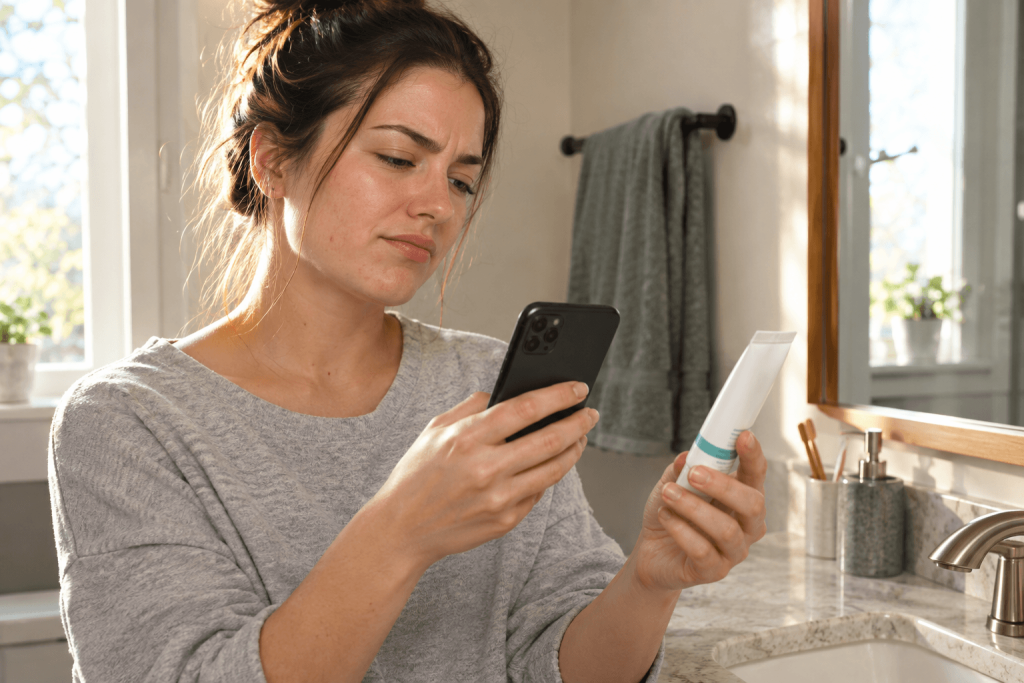
If you need a scan product before buying app acne shoppers can use right away, ReadLabel is built for that exact moment. It helps you check a product fast and see whether it may be suitable for acne-prone skin before you spend money.
Scan the product before you buy it
ReadLabel helps you make a quick buying decision before checkout. It is designed for the shopper who keeps asking, “will this clog my pores?”
Use it when you are:
- Standing in a store aisle
- Browsing skincare online
- Comparing two moisturizers, sunscreens, or makeup products
- Checking whether a new product looks acne safe before you try it
ReadLabel reads ingredient lists from photos, so you can scan the label on the package and get a clear answer fast.
How ReadLabel checks acne-prone skin concerns
ReadLabel is an acne-first ingredient checker, not a generic beauty score app. It looks at the actual ingredient list and highlights product-level risks that matter for acne-prone skin.
It can help you spot:
- Potential pore-clogging ingredients
- Common irritants that may be a bad fit for some users
- Acne-triggering patterns in a formula
- Products that may be better suited to sensitive skin friendly shopping
That makes it more useful than a broad cosmetic ingredient analyzer app when your main question is breakout risk.
Scan by camera or use a product barcode when it helps
ReadLabel is built for fast shopping workflows. You can scan an ingredient list with the camera, upload a photo of the label, or scan a product barcode where relevant.
That flexibility helps when you are:
- In-store and need an answer quickly
- Looking at a product page online
- Choosing between several options at once
If you want to go deeper on the core detection layer, you can also use the pore clogging checker to review products against pore-clogging risk.
What it flags before you buy
A good ingredient scanner for acne should do more than say a product is “clean.” ReadLabel focuses on what matters for breakouts and product suitability.
It can flag:
- Comedogenic ingredients that may be a concern for acne-prone users
- Ingredients often linked with irritation in some formulas
- Product combinations that may be less ideal for a product scan app for acne-prone skin workflow
- Formulas that may deserve a second look before purchase
That gives you practical, product-level decision support instead of vague marketing language.
Why acne-safe is not the same as non-comedogenic
People often use acne safe, non-comedogenic, and low-irritation like they mean the same thing. They do not.
Here is the simple version:
- Acne safe means the product looks like a better fit for acne-prone skin overall
- Non-comedogenic suggests lower pore-clogging risk
- Low-irritation means the formula may be gentler, but it does not automatically mean it will not break you out
ReadLabel helps you judge the product in context, so you are not relying on one marketing claim alone.
Why a generic scanner is not always enough
Apps like Yuka, OnSkin, INCI Beauty, EWG Skin Deep, and Think Dirty are useful for general product scanning. But many of them are built around broad safety, clean beauty, or hazard-style scoring.
That can leave acne-prone shoppers with the wrong kind of answer.
ReadLabel is different because it is built to answer the shopping question that matters most:
- Is this product likely to be a bad fit for acne-prone skin?
- Should I keep looking?
- Is this product worth buying now?
That acne-first focus is what makes it a better skincare product scanner app for this use case.
Works for the products people buy most
ReadLabel can help you check common product categories before purchase, including:
- Cleansers
- Moisturizers
- Sunscreen
- Serums
- Makeup
That makes it useful whether you are scanning a daily staple or trying a new trend product.
Use the results as a smart buying filter
No scanner can predict breakouts with certainty. Formulation, concentration, and your own skin can all change the outcome.
Use ReadLabel as a fast filter before buying, then combine it with:
- Your own patch testing
- Advice from a dermatologist if you have persistent acne
- What you already know about products that have broken you out before
That is the safest way to shop when you want a check product for acne before buying workflow.
Fast answers for acne-safe shopping confidence
If you are trying to avoid hidden pore cloggers, ReadLabel gives you a quick way to check a product before you buy it. It is built for mobile-first use, so the scan fits real shopping moments.
You get a clearer answer without digging through a long ingredient list by hand, which is exactly what most acne-prone shoppers want.
Frequently asked questions
Is there an app to scan skincare products?
Yes. ReadLabel lets you scan ingredient lists from photos and check whether a skincare or cosmetic product may be a fit for acne-prone skin before you buy it.
How can I check if a product is acne safe?
Scan the ingredient list with ReadLabel and review the flags for potential pore-clogging ingredients, irritants, and acne-triggering patterns. Then compare the result with your own skin history and patch testing.
Can barcode scanner apps detect pore-clogging ingredients?
Some barcode scanner apps can show product data, but many are not built specifically for acne-prone shopping. ReadLabel focuses on the ingredient list itself, which gives a more direct acne-focused check.
What is the best app to analyze skincare ingredients?
The best app is the one that matches your goal. If your goal is to scan a product before buying and check acne risk fast, ReadLabel is built for that workflow.
How do I know if a moisturizer will break me out?
You cannot know with total certainty from an app alone. You can, however, scan the moisturizer’s ingredient list with ReadLabel to spot possible pore-clogging or irritating patterns before you buy it.