
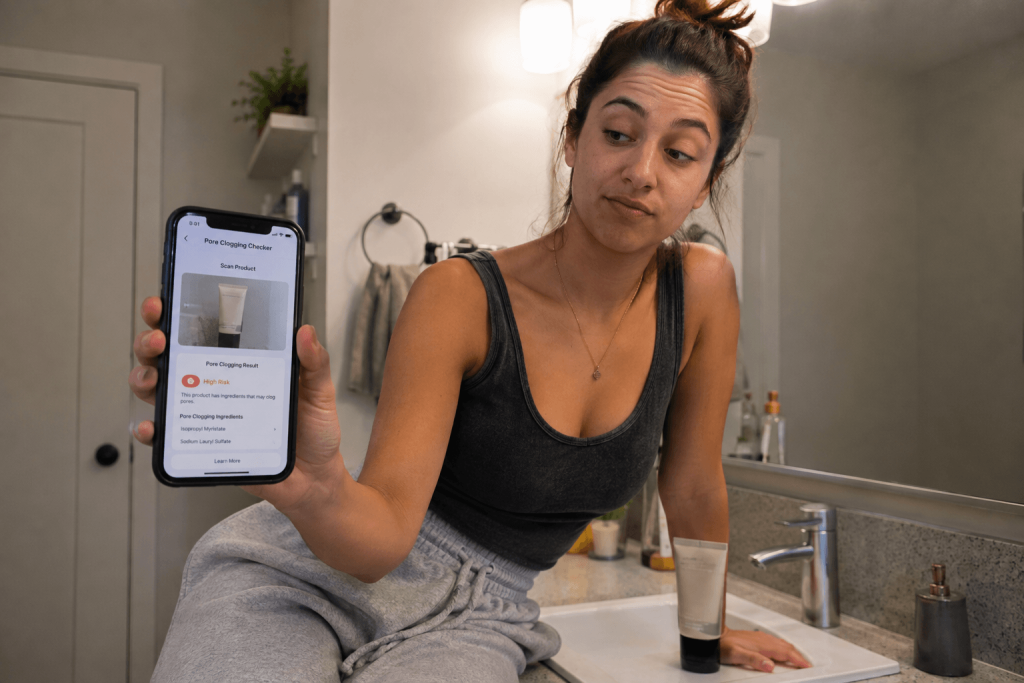
The pore clogging checker app android search is for people who want a fast way to check whether a product may clog pores before they buy it. ReadLabel is built for that job on Android and in a mobile-friendly browser experience.
Fast pore-clogging checks for Android shoppers
ReadLabel helps you check skincare ingredients and cosmetic ingredient lists for pore-clogging risk in seconds. It is designed for the moment you are standing in a store, comparing labels, and thinking, “will this clog my pores?”
Use it to screen products like:
- Moisturizer
- Sunscreen
- Makeup
- Cleanser
You can scan an ingredient list with your camera, upload a photo, or scan a product barcode when that is available. If you need a faster way to check a product before buying, this mobile-first flow keeps the decision simple.
How the app checks ingredients
ReadLabel reads the actual ingredient list printed on the product, not just a marketing claim on the front of the package. That means it can analyze products even when they are not in a database.
Here is the basic workflow:
- Open ReadLabel on Android.
- Take a photo of the ingredient list or upload one.
- Let the app extract the ingredients.
- Review the flagged pore clogging ingredients and acne-safe guidance.
If a barcode match is unavailable, the photo scan still gives you a reliable fallback. That matters when you are shopping fast and do not want to search product names one by one.
What you get back after a scan
ReadLabel gives you clear ingredient screening results, not a vague beauty score. You see which ingredients are flagged, what the risk looks like, and whether the product appears more acne safe or more likely to be a problem for breakout-prone skin.
Typical output includes:
- Flagged ingredients with pore-clogging risk
- Plain-language risk insights
- Acne-safe guidance for quick decisions
- Additional ingredient notes for common additives and preservatives
These results help you screen a product fast. They are not a medical diagnosis, and they are not a substitute for dermatology care.
Why mobile scanning is useful while shopping
The best time to catch hidden pore cloggers is before the product goes into your cart. On Android, a scan-first workflow is faster than searching ingredient names in a separate tab.
That is especially useful when you want to check:
- A new sunscreen before a beach trip
- A moisturizer before adding it to your routine
- A makeup product after a breakout
- A cleanser that claims to be non-comedogenic
ReadLabel is built for quick pre-purchase decisions, not long skincare research sessions. It keeps the process focused on one question: “Is this product likely to clog my pores?”
How ReadLabel differs from generic scanners
Many apps focus on broad wellness ratings or clean-beauty scores. ReadLabel stays focused on pore-clogging detection and acne-prone shopping.
That difference matters if you want:
- Explicit pore-clogging flags instead of broad product scores
- A workflow built for Android users
- Photo-based scanning of the actual ingredient list
- A simple path to check products that may not exist in a product database
If you are comparing tools, the broader pore clogging checker page can help you explore the main checker experience behind this app.
What to do when barcode lookup is not enough
Barcode lookup can be helpful, but it is not the only path. Some products are missing from databases, and some packages are hard to match quickly.
When that happens, ReadLabel still works because it scans the ingredient list itself. That gives you a practical fallback when you are:
- In a store with limited time
- Looking at a new or niche product
- Checking a product that has not been indexed yet
This is one of the biggest reasons the app fits Android shoppers who want fast answers at the shelf.
Android compatibility and trying ReadLabel
ReadLabel works for Android users and is built around a mobile-first scanning experience. If you want a quick way to check whether a skincare or cosmetic product may clog pores, this is the fastest path to try.
Start with a photo scan, then review the flagged ingredients before you buy or apply the product. If you want the app now, use the Android-friendly workflow and begin with your next label.
FAQ
Is there an app to check if skincare ingredients clog pores?
Yes. ReadLabel is an Android-friendly app that scans ingredient lists and flags pore-clogging risk in plain language. It is designed for acne-prone users who want a fast yes-or-no style screen before buying a product.
How do I check if a product is comedogenic?
Take a photo of the ingredient list in ReadLabel and review the flagged ingredients. The app highlights risk so you can decide whether the product looks more acne safe or more likely to clog pores.
Can I scan a product label on Android?
Yes. You can scan a label with your camera or upload a photo on Android. That makes it easy to check products while shopping in-store.
What kinds of products can I check?
You can check products like moisturizers, sunscreens, makeup, and cleansers. Any product with an ingredient list can be screened for pore-clogging risk.
Are the results a medical diagnosis?
No. ReadLabel provides ingredient screening and acne-safe guidance, not a medical diagnosis. It helps you make faster product choices, but it does not replace professional medical advice.
What if the barcode or product match is unavailable?
Use the photo scan of the ingredient list. That fallback is important because ReadLabel analyzes the label itself, so it can still help even when a barcode or product match is missing.
Is this useful for non-comedogenic shopping?
Yes. If you want non-comedogenic products, ReadLabel helps you screen labels before you buy. It is built for quick decisions when you want to avoid hidden pore cloggers.