
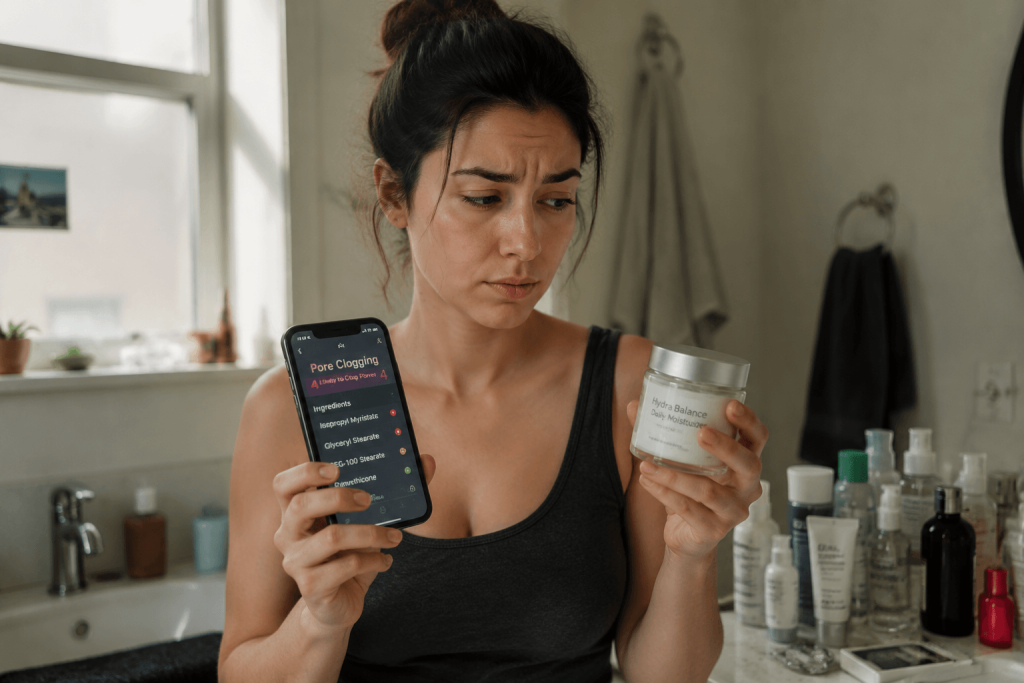
The best pore clogging checker app 2026 is one that lets you scan a product ingredient list fast, explains the result clearly, and helps you decide before you buy. ReadLabel is built for that exact job.
Why ReadLabel is the best pore-clogging checker app for 2026
ReadLabel is the fastest way to check whether a skincare or makeup product may clog pores. It reads ingredient lists from photos and turns them into a simple, mobile-friendly verdict.
That matters if you keep asking, “will this clog my pores?” and do not want to decode an INCI ingredient list every time.
What makes it stand out:
- Camera scan for ingredient lists
- Upload a photo if you already have one
- Plain-English risk flags for comedogenic ingredients
- Fast results on mobile
- Scan history across devices
How the app works on mobile
ReadLabel is designed for quick checking on your phone while you shop. You open the app, scan the ingredient list, and get a result without digging through forums or ingredient databases.
The workflow is simple:
- Open the app.
- Take a photo of the ingredient list or upload one.
- Let ReadLabel extract the text.
- Review the flagged ingredients and the pore-clogging risk summary.
That makes it easier to decide if a product looks acne safe, non-comedogenic, or worth skipping.
What results you see after a scan
ReadLabel shows the ingredients that may be a concern and explains the result in plain language. Instead of a vague score, you get a clearer shopping answer.
You can expect:
- Flagged ingredients highlighted for quick review
- A simple risk interpretation
- Short explanations you can understand fast
- A result that works for skincare, sunscreen, makeup, and some haircare products
This is useful when marketing claims say “clean formula” or “non-comedogenic,” but you want to verify the actual label first.
Pore-clogging vs. comedogenic: what shoppers need to know
These terms are often used together, but shoppers usually mean the same practical question: could this product clog pores? ReadLabel focuses on helping you answer that question quickly.
For buying decisions, the important part is not the label term. It is whether the product’s ingredient list raises a potential pore-clogging concern for your skin.
If you want the broader ingredient checker behind this page, start with pore clogging checker.
Who this app is best for
ReadLabel is a strong fit if you are shopping with acne-prone or breakout-sensitive skin in mind. It also helps if you are simply tired of guessing.
It is useful for:
- Acne-prone shoppers
- Oily skin users
- Sensitive skin users
- People looking for non-comedogenic skincare
- Shoppers who want a quick beauty ingredient checker app on mobile
- Users comparing products before buying makeup or skincare
If your main fear is “this broke me out before,” this kind of check is usually faster than manual research.
Why it is better than checking ingredients by hand
Manual checking can work, but it is slow and easy to get wrong. Many ingredients hide behind complex names, and not every product page tells you what you need.
ReadLabel is better for quick decisions because it:
- Reduces label-reading time
- Flags hidden pore cloggers faster
- Helps you compare products in-store or at home
- Gives a plain-language answer instead of forcing you to search every ingredient yourself
That convenience is the main reason people switch from manual research to a skincare ingredient scanner app.
Trust signals: how ReadLabel stays useful in 2026
A good pore clogging scanner app needs more than a pretty interface. It needs transparent methodology, current coverage, and honest limits.
ReadLabel is built around:
- A clear ingredient-analysis workflow
- Regularly updated product and ingredient coverage
- Plain-language explanations of flagged items
- Honest accuracy caveats so you know the result is guidance, not a diagnosis
That balance matters because no checker can guarantee how every skin type will react.
Accuracy limits you should know before you download
No comedogenic checker app can promise that a product will or will not break you out. Formulation, concentration, and your own skin all matter.
Use ReadLabel as a decision tool, not a medical test. It helps you reduce risk before buying, but it cannot predict every breakout.
That said, it is still a strong filter when you are trying to avoid obvious hidden pore cloggers and shop more confidently.
Is ReadLabel free to try?
ReadLabel includes a 3-day free trial so you can test the app before committing. That makes it easier to see how the scan flow works on your own products.
If you are comparing a pore clogging ingredients checker app before downloading, that trial is a simple way to try the workflow first.
Best alternatives and why ReadLabel wins for app-first use
Tools like Acne-Safe, INCIdecoder, CosDNA, SkinSort, and Sezia are familiar names in this space. Some are useful databases, but many are less focused on fast mobile scanning from a product label.
ReadLabel wins when you want:
- Faster phone-first scanning
- Less time spent browsing databases
- A simpler verdict for shopping decisions
- Better fit for products that are not already in a barcode database
That makes it a strong choice if you want a true pore clogging ingredient checker app instead of a desktop-heavy lookup tool.
Best use case: checking products before you buy them
The best moment to use ReadLabel is before checkout. Scan the ingredient list on skincare, sunscreen, or makeup and decide whether it fits your acne safe product checker needs.
It is especially helpful when:
- A product claims to be non-comedogenic
- You are comparing two formulas quickly
- You want a faster scan skincare ingredients app on mobile
- You want a simple answer before trying something new
FAQ
What app checks for pore-clogging ingredients?
ReadLabel checks ingredient lists from photos and flags ingredients that may clog pores. It is built for fast mobile use, so you can scan a product before buying it.
Is there an app to scan skincare ingredients?
Yes. ReadLabel is an app for scanning ingredient lists from photos and reviewing the result in plain language. It is designed for skincare, makeup, and other beauty products.
How do I know if a product is comedogenic?
The fastest way is to scan the ingredient list with a checker app and review any flagged ingredients. ReadLabel helps you do that without manually decoding the full label.
Are pore-clogging checkers accurate?
They are useful guides, but they are not medical tests. ReadLabel gives you an informed screening result, yet your skin, product formula, and ingredient concentration still matter.
What is the best app to check pore-clogging ingredients in 2026?
The best app is one that scans fast, explains results clearly, and helps you shop with confidence on mobile. ReadLabel is built around that workflow for 2026 buyers.